Torture is not treatment: what therapeutic communities reveal about rights violations
On the International Day of Support to Victims of Torture, Conectas shows data on inspections and monitoring that reveal how therapeutic communities have been associated to human rights violations, forced labor, and deprivation of liberty in Brazil
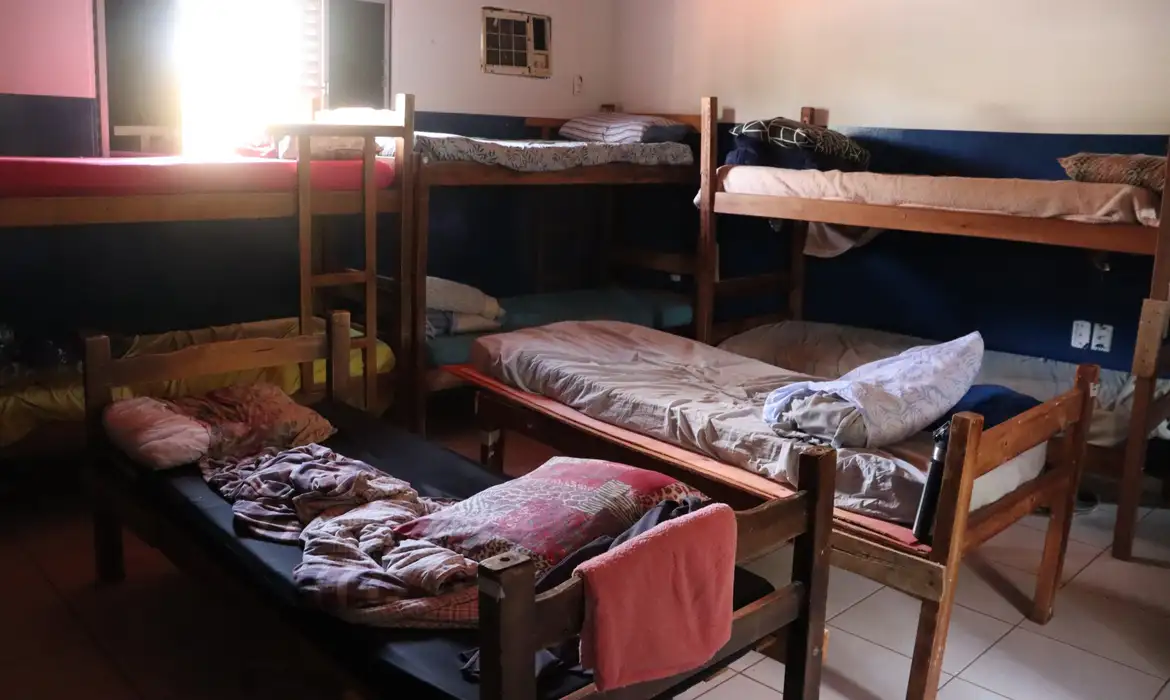
Created to shelter people with problems related to the abuse of alcohol and other drugs, therapeutic communities have become one of the main receivers of public funds in the Brazilian drug policy. Meanwhile, inspections by monitoring bodies have identified a persisting pattern of rights violations in these spaces, including forced labor, restriction of liberty, isolation, and religious imposition.
On the eve of the International Day of Support to Victims of Torture, celebrated on June 26, Conectas gathers data from the National Torture Prevention and Combat Mechanism (MNCPT, acronym in Portuguese), operations of the Ministry of Labor and recent research that help establish a debate that involves mental health, human rights, and the role of the State in funding these institutions.
Created to prevent and monitor violations in spaces of deprivation of liberty, the MNPCT is a crucial entity in the defense of human rights in Brazil. Its role is to inspect institutions, produce reports, and formulate recommendations to prevent degrading, cruel, or torture practices from being naturalized by the State. In the case of therapeutic communities, its work brought to light a reality that is often covered up by the discourse of sheltering and recovery.
Read more


What the MNPCT inspections say
In 2017, the Report of the National Inspection of Therapeutic Communities analyzed 28 institutions in 12 States and revealed a concerning pattern: many such institutions operate with asylum characteristics, contradicting the principles of the Psychiatric Reform and basic rights guarantees. The document reports involuntary and compulsory internment without proper clinical grounds, restrictions on contact with relatives, document retention, constant surveillance, and concrete obstacles preventing people from leaving the institutions.
A model based on isolation, discipline, and religiousness
To the MNPCT, violations identified in the therapeutic communities are not isolated cases; rather, they are the result of a specific institutional model. According to the entity, many such institutions operate from a logic of social segregation, rigid discipline and imposition of religious practices, which contradicts the public mental health policy established after the Psychiatric Reform.
“Therapeutic communities take on an asylum-based proposal based on social isolation, the imposition of disciplinary rules and a religious doctrine, and the exploiting of unpaid labor by the inpatients”, states Carolina Lemos, investigator of the MNPCT, in an interview to Conectas.
In her assessment, this model replaces approaches based on scientific evidence with a moralizing perspective on the use of alcohol and other drugs. “The lay bases of the approach of demands associated with the use of alcohol and other drugs are denied in favor of a moralizing, fundamentalist conception that sees abstinence as the sole possible strategy and that seeks cure through religion”, she says.
Lemos further emphasizes that the care offered by these institutions requires permanent surveillance by control bodies and civil society. “It is crucial for civil society to pay attention in order to monitor and discuss this topic with inspection bodies, such as the torture prevention mechanisms, the Public Defender’s Office and the State Attorney’s Office.”
Inspections carried out by the MNPCT and other control bodies reinforce this diagnosis. Reports made over the last decade report practices such as restrictions on contact with family members, document retention, barriers against leaving the institutions, fines due to breach of contract, and the use of unpaid labor as part of the so-called therapeutic process. According to experts and human rights bodies, these elements bring some of the therapeutic communities closer to a logic of incarceration, more associated with control and discipline than with healthcare.
Everyday life at these institutions is also notable for punishment mechanisms, containment without a proper clinical structure and episodes of physical assault. So-called labor therapy, presented by many institutions as a vehicle for rehabilitation, appears in the inspections as unpaid work involving cleaning, maintenance, and the very operation of these entities. What is most severe is that these spaces also began receiving teenagers, the elderly, and people with multiple mental disorders, often operating as an institutional destination for vulnerable populations.
A structural pattern of violations
The report Comunidades Terapêuticas em Evidência (2025) (Highlighting Therapeutic Communities, in a free translation) reinforces and expands this diagnosis. Its strongest datum is that 100% of the 205 therapeutic communities inspected presented evidence of human rights violations. This result suggests that the problems identified are not mere isolated cases; rather, they make up a recurring pattern found in different regions of the country.
The expansion of these institutions occurred in parallel with the hardships faced by the Psychosocial Care Network (RAPS, acronym in Portuguese), responsible for public services such as the Psychosocial Care Centers (CAPS, acronym in Portuguese). Instead of strengthening care strategies outside of an inpatient setting and harm reduction policies, a significant portion of public investments has been directed to structures marked by recurring violation reports.
Therefore, the debate is not restricted to the conditions found within the institutions. It also involves the direction of public policies meant for the care of people who present a problematic use of alcohol and other drugs and the way in which the State chooses to fund these responses.
The public funding of therapeutic communities
Though they are mostly private and religious institutions, many therapeutic communities receive public funding. According to a survey by the Institute of Applied Economic Research (Ipea, acronym in Portuguese), published in 2017, 41.1% of these entities received municipal funding, 27.8% received state funding, and 24.1% received federal funding. Over half of them received funds from at least two levels of government.
The datum helps explain why the discussion on inspections has become more relevant over the past few years. Since public funds support a significant portion of these institutions, this also includes the demand for transparency, social control, and rights assurance.
Concerns with the destination of public funds to these institutions are not a recent matter. A study carried out by Conectas and by the Brazilian Center for Analysis and Planning (Cebrap, acronym in Portuguese) showed that therapeutic communities received at least BRL 560 million in public funds between 2017 and 2020, considering transfers from federal, state, and municipal levels.
The survey also found a tendency for the expansion of this funding in subsequent years and alerted to the absence of inspection patterns and transparency on the contracted services, their costs, outcomes, and effectiveness as a public policy. According to the research, many of these entities offer treatment based on isolation, abstinence, and spirituality, while lacking consistent monitoring and assessment methods by public authorities.
The study also warned of legislative changes that could expand state support to the sector. Complementary Law no. 187/2021, sanctioned by then-president Jair Bolsonaro, began to allow therapeutic communities to seek tax immunity, creating an indirect form of public funding. For researchers, the expansion of funds destined to these institutions reinforces the need for more robust mechanisms for the control, inspection, and assessment of the results achieved.
Forced labor as “therapy”
One of the most sensitive matters involves the use of labor as a therapeutic instrument. In October 2024, the Ministry of Labor and Employment included four therapeutic communities in what is referred to as the “Dirty List” of slave labor. The inspection operations resulted in the rescue of 94 people subjected to conditions analogous to slavery. All cases involved religious institutions managed by religious leaders.
One of the entities, located in Bahia, was still active in the registry of suppliers to the federal government, even after the workers were rescued. Another, in Minas Gerais, continued qualified to receive public funds after the operation that removed six people from the institution.
Besides, Operation Resgate IV removed 18 people from a therapeutic community in Pernambuco. The case is not part of the list because the administrative proceedings have not yet been finalized.
The occurrences reinforced the discussion on the limits between therapeutic activities, compulsory labor, and labor exploitation within these institutions.
The budgetary expansion of TCs in São Paulo
In São Paulo, the topic is even more relevant due to the volume of public funds directed to therapeutic communities. According to a dossier produced by the Initiative on the Right to Memory and Racial Justice (IDMJR, acronym in Portuguese), around 95% of the budget established for the state’s drug policy was transferred to these institutions, with BRL 98 million expected to be spent in 2026.
At the same time, recent complaints put some of these institutions under the gaze of inspection bodies.
In December 2025, a therapeutic community in the São Paulo state countryside was interdicted under suspicion of maintaining its residents in slave-like conditions. In March 2026, an institution located in Suzano was closed after a Health Inspection identified expired food and drugs stored without the proper prescription.
The São Paulo State Public Defender’s Office also has pointed out problems related to the restriction of circulation, limitation of resident autonomy, and characteristics compatible with asylum models.
In an inspection carried out in 2026, with the collaboration of the MNPCT, Conectas Direitos Humanos, and Desinstitute, over 50 women were rescued from a therapeutic community located in Guarulhos, greater São Paulo area. In this case, several human rights violations were also identified, including forced removals, aggression, and involuntary internment.
The challenge of prevention
The data gathered by torture prevention mechanisms, inspection bodies, and research institutes point to a challenge that surpasses the mental health area. The debate involves the capacity of the State to assure public policies destined to vulnerable populations are compatible with fundamental rights and democratic control mechanisms.
In this context, civil society organizations have requested the fulfillment of international commitments undertaken by Brazil and defended the creation of a state mechanism for the prevention and combat of torture in São Paulo, observing parameters recommended by the National Torture Prevention and Combat Committee. The proposal seeks to strengthen the control of different spaces of deprivation of liberty and expand the response capacity in the face of violation complaints.
Combat against torture requires its acknowledgment, even in spaces presented as therapeutic. When isolation, coercion, deprivation of liberty, and forced labor become part of an institution’s routine, the debate is no longer just about treatment and involves the protection of fundamental human rights.