At the UN, civil society warns of the impacts of artificial intelligence on political rights and elections
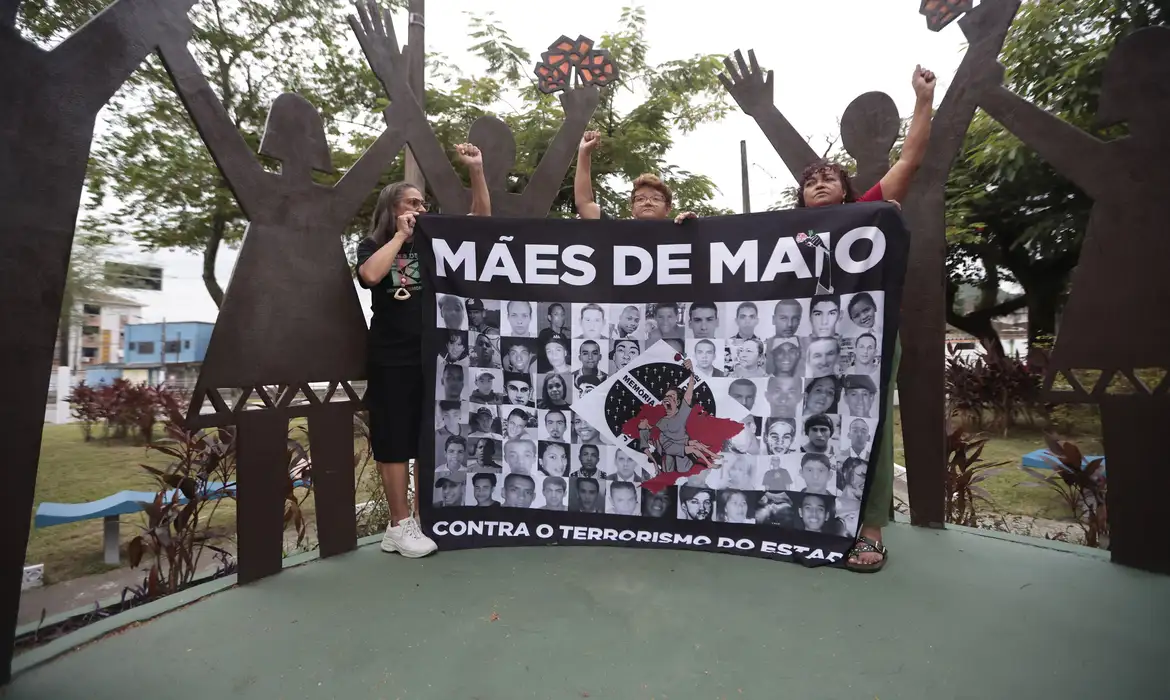
Resident protests police raid that killed 14 people in Guarujá, 90 km away from São Paulo, on August 2nd, 2023. (Photo: Allison Sales / AFP)
 Domingo, 07 de outubro de 2018, dia de votação em primeiro turno das eleições no Brasil. O brasileiro escolherá candidatos para os cargos de deputado federal, deputado estadual (distrital), senador (duas vagas), governador e presidente.
Para não esquecer os números dos seus candidatos no momento da votação, a Justiça Eleitoral disponibiliza a chamada “cola eleitoral”, que pode ser levada à cabina de votação. É importante digitar o número de cada candidato com atenção e conferir a foto do político escolhido antes de apertar a tecla “Confirma”. Caso ocorra algum erro, o eleitor pode apertar a tecla “Corrige” antes de finalizar o processo e digitar o número novamente.
Centro de Ensino Fundamental (CEF) 14 - Taguatinga Norte/DF.
Foto: Edilson Rodrigues/Agência Senado
Domingo, 07 de outubro de 2018, dia de votação em primeiro turno das eleições no Brasil. O brasileiro escolherá candidatos para os cargos de deputado federal, deputado estadual (distrital), senador (duas vagas), governador e presidente.
Para não esquecer os números dos seus candidatos no momento da votação, a Justiça Eleitoral disponibiliza a chamada “cola eleitoral”, que pode ser levada à cabina de votação. É importante digitar o número de cada candidato com atenção e conferir a foto do político escolhido antes de apertar a tecla “Confirma”. Caso ocorra algum erro, o eleitor pode apertar a tecla “Corrige” antes de finalizar o processo e digitar o número novamente.
Centro de Ensino Fundamental (CEF) 14 - Taguatinga Norte/DF.
Foto: Edilson Rodrigues/Agência Senado
Between May 12 and 21, 2006, a wave of police violence and extermination swept the state of São Paulo and left at least 564 people dead due to gun violence. Most of the victims were going, Black, and residents of the city outskirts. Two decades later, what remains is not just the memory of the tragedy, but the absence of State response, the delay in accountability, and the persistence of relatives and organizations in the fight for truth, justice, and reparation.
The May Crimes exposed a security policy marked by institutional racism, disproportionate use of force, and systematic lack of protection of victims’ families, which to this day face obstacles to obtain recognition, reparation, and access to justice. The institutional delay itself became a part of the tragedy.
From pain to advocacy
Over these 20 years, relatives, particularly the Mães de Maio Movement, turned their grief into a public outcry and political articulation. The fight is not limited to the individual accountability of state operatives; rather, it questions the structure that naturalizes violence against Black bodies from city outskirts. In this trajectory, organizations like Conectas and the Public Defender’s Office have worked to prevent the case from being swallowed by time and the statute of limitations.
Read more

Today, the main legal debate is around the possibility of the State being held accountable in civil law for the deaths. The discussion is at the Superior Court of Justice and opposes two interpretations: on the one hand, the thesis that the action would be time-barred; on the other, the defense that very sever human rights violations cannot be treated as if they were common conflicts between individuals. A core principle is at stake: can crimes of this nature be erased by time?
Justice in the international sphere
The Brazilian institutional response has been considered insufficient, and hence the case has exceeded national borders. The Inter-American Commission on Human Rights brought the case before the Inter-American Court, reinforcing the structural dimension of the violations and the responsibility of the Brazilian government.
More recently, organizations and relatives also sent an appeal to the UN against the time-barring of the case. The gesture seeks to pressure Brazil into recognizing that the absence of an effective investigation, accountability, and reparation extends the violence suffered by the families. This is not just about memory: it’s about preventing impunity from being consolidated as a rule.
Besides, Conectas and relatives have defended measures of non-repetition, i.e. actions that can reduce the chance of new similar tragedies. These include the strengthening of memory, transparency, and control over police action, so that the State will refrain from treating the population of the city outskirts as a permanent target.
Popular Court: memory, denunciation, and narrative dispute
As a hallmark of the 20 years of the case, a Popular Court of the Crimes of May will be held. The initiative is symbolic, pedagogic and political: a space for articulation between people, organizations, and social movements affected by different forms of state violence.
The Popular Court proposes an agenda to seek justice from voices that have historically been silenced. In it, family members, movements, and entities take center stage to narrate what the formal system insists on not hearing. The purpose is to state the rights to memory, truth, reparation and non-repetition, in addition to disputing the official version of the events of 2006.
The schedule contains a collective construction throughout 2026, with qualified listening, public conversation, documentary research, and political education. The launch is set for May 14th, 2026, followed by activities throughout the year and a final session in May 2027, when a popular verdict will be handed down.
The Popular Court also establishes itself as a bet on transformative justice: beyond holding individuals accountable for the tragedy, one must face the structures that produce violence, such as violence, racism, penal bias, and the dehumanization of the city outskirts. Hence, mothers and relatives will be not just witnesses, but also protagonists and judgers of a history that the State attempted to shut down unanswered.
Twenty years later, the Crimes of May remain an open wound and a decisive test for Brazil’s commitment to human rights. The institutional violence that unleashed the tragedy still lacks a corresponding response, and what’s at stake is the right of families to memory, truth, justice, and not being condemned to oblivion.