Organizations resort to the UN to report the weakening of the protection of children who are victims of sexual violence
At the UN Human Rights Council, organizations warn of the impacts of suspending the Conanda resolution on sexual violence and legal abortion
 An activist in favour of the legalization of abortion demonstrates outside the Rio de Janeiro Legislative House in Rio de Janeiro, Brazil, on August 08, 2018. Brazilian women march calling the Brazilian Supreme Court to vote on legalizing abortion. The movement is inspired in the Argentinian demonstrations calling the legalization of abortion in the Latin American country.
The suspension of the resolution by the National Children and Adolescent Rights Council (Conanda, acronym in Portuguese), which established guidelines for the humane care of children and adolescents who are victims of sexual violence and ensured access to legal abortions, was the subject of a complaint by Brazilian civil society organizations at the UN. The statement was offered during the 62nd session of the United Nations Human Rights Council, in Geneva, directed to the special rapporteur on contemporary forms of racism, racial discrimination, xenophobia, and related intolerance.
The pronouncement was presented on behalf of Conectas, Coletivo Feminista Sexualidade e Saúde, Plan International Brasil, Gabinete de Assessoria Jurídica às Organizações Populares (GAJOP), Plataforma Dhesca Brasil, Fórum Nacional dos Direitos da Criança e do Adolescente, Associação Nacional dos Centros de Defesa da Criança e do Adolescente (Anced), Católicas pelo Direito de Decidir, Grupo Curumim, Rede Feminista de Saúde, Nem Presa Nem Morta, Bloco A, Centro Brasileiro de Estudos de Saúde (Cebes), Instituto Rede Abrigo, Cladem Brasil, Frente Nacional Contra a Criminalização das Mulheres e pela Legalização do Aborto, and Anis – Instituto de Bioética.
In the statement, the organizations claimed that the overturning of the resolution represents a weakening of the institutional coordination of public policies meant for the protection of children and adolescents who are victims of sexual violence. According to the text, the rule established national guidelines for humane care and contributed to the reduction of territorial, racial, and socioeconomic inequalities in access to services.
Read more

The entities also highlighted data that show the barriers faced by girls and women in accessing legal abortions in Brazil. There are currently only 185 hospitals registered to carry out the procedure, with 60% of them concentrated in just four states. A study carried out with 55 women and girls who needed to cross state lines to access the service in 2025 showed that nearly 70% were within the up to two minimum wages income bracket and half of them were Black.
The pronouncement further noted that Black girls are the majority among rape victims in the country and among the pregnant 10 to 14-year-old population, which demonstrates how obstacles to legal abortion disproportionately affect historically vulnerable groups.
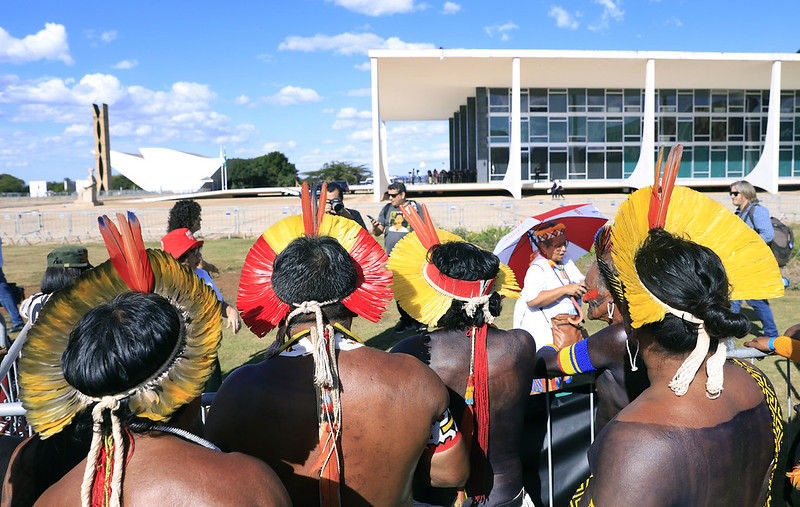
In this scenario, the organizations requested that the special rapporteur should question the Brazilian state on the Senate’s decision and recommend the reestablishment of the Conanda resolution. According to the declaration, the measure is necessary to ensure full protection for girls under greater vulnerability, particularly those who are Black, Indigenous, Quilombolas, and residents of regions distant from major urban centers.