Conectas and the Coalition for Socioeducation call upon the UN against proposed constitutional amendment son the age of criminal responsibility
Organizations warn of the “severe violation” of the rights of children and adolescents and ask for an urgent stance from international mechanisms
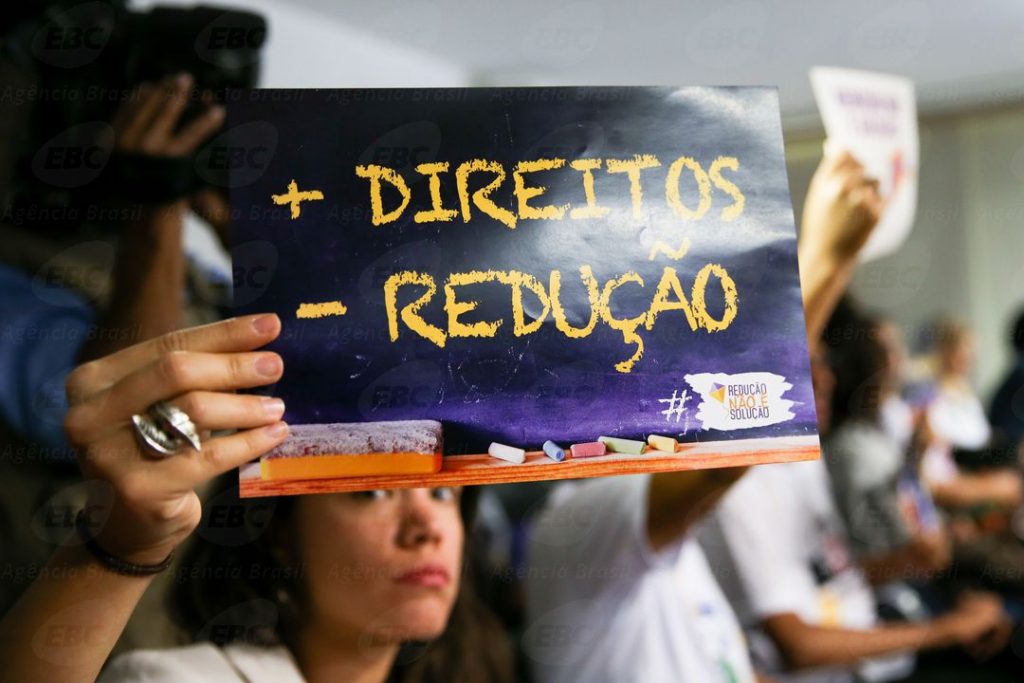 Foto: Marcelo Camargo/Agência Brasil
Conectas and the Coalition for Socioeducation lodged an urgent appeal before the United Nations (UN) warning of the risks of legislative draft bills that seek to reduce the age of criminal responsibility in Brazil from 18 to 16. The document was sent to the Regional Office of the High Commissioner of the UN for Human Rights and three special rapporteurs in the organization.
In the document, the organizations state that, were the proposals to pass, this would “constitute a severe violation of international human rights obligations undertaken by Brazil”, particularly the Convention on the Rights of Children, which establishes a specialized juvenile justice system meant for accountability and the social reintegration of adolescents.
The appeal was caused by the resumption of discussions on constitutional amendment proposal 32/2015 at the Lower House of Representatives. According to the entities, the creation of a special commission to analyze the proposal entails “real risks of severe setbacks”. They further recall that, in 2025, the UN Committee on the Rights of Children recommended that Brazil should “not approve any reduction in the age of criminal responsibility” and suspend legislative initiatives to that end.
Read more

The organizations further claim that reducing the age of criminal responsibility is incompatible with the Federal Constitution and warn that the measure would bring adolescents to an overpopulated prison system riddled with rights violations. The document highlights that the proposal “does not fight the structural causes of violence in Brazil or present an effective public security proposal”.
In the end, the Coalition for Socioeducation and Conectas ask that the UN make a statement on the proposed amendments to the constitution, forwarding a technical report to Congress and strengthening dialog with civil society organizations. According to the entities, “the voice of international human rights bodies would be crucial to restate the commitments undertaken by Brazil before the international community and avoid legislative setbacks that will directly affect children and adolecents”.