What is the importance of the CNDH, the National Human Rights Council, for Brazil?
Over 40 organizations defend the CNDH before the UN. Find out why the Council is essential in the protection of human rights in Brazil
 Sala do Conselho de Direitos Humanos da ONU
Over 40 Brazilian civil society organizations, including Conectas, sent a letter to the United Nations (UN) defending that the National Human Rights Council (CNDH, acronym in Portuguese) should be recognized as the national human rights institution in Brazil. The document was forwarded to the Global Alliance of National Human Rights Institutions (GANHRI) in the context of the international accreditation process slated for 2026.
The initiative rekindles a fundamental debate for Brazilian democracy: what is the role of the CNDH in the promotion and protection of human rights in the country?
In a country that is still marked by profound inequality and recurring human rights violations, the existence of a public body dedicated to the defense of fundamental rights is considered essential to strengthen social participation, public policy monitoring, and State accountability mechanisms. It is in this context that the National Human Rights Council takes a strategic role.
Read more

Created by Law no. 12,986, of 2014, the CNDH is the result of an extensive trajectory of institutional construction and social participation in the field of human rights. Its mandate includes the prevention and the fight against violations, the inspection of risky situations, the monitoring of public policies, and the formulation of recommendations to public powers.
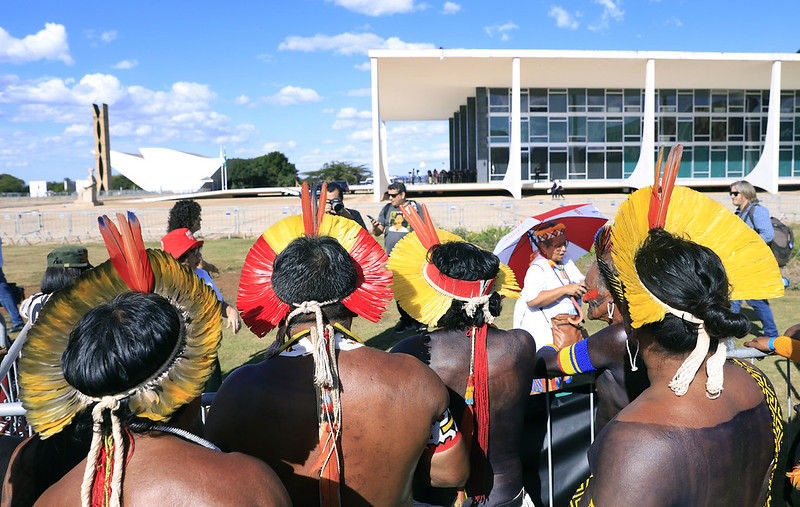
The advantage offered by the Council is the combination of institutional autonomy and plurality. Its composition gathers representatives from the State and civil society, allowing repots, claims, and social conflicts to be analyzed by a public instance with monitoring and advocacy capabilities. This characteristic has been crucial in topics such as police lethality, the prison system, indigenous people and quilombola rights, protection of human rights defenders, structural racism, violence in rural environments, and the assurance of social rights.
In the letter sent to the UN, the organizations argue that the CNDH is the sole body created by the Brazilian State with the specific purpose of promoting and protecting human rights. Though other public institutions have relevant roles in this agenda, the document states that none of them were conceived, by law, to play this role in a proper, permanent, plural, and autonomous manner.
For the signatory entities, recognizing the Council as a national human rights institution means strengthening a public space directed towards the receipt of complaints, the control of violations, and the request of answers from the State in the face of situations that affect fundamental rights.
For organizations like Conectas DIreitos Humanos, the CNDH also plays a key role in the articulation between civil society and the public authorities. In areas like strategic litigation, international advocacy, public policy monitoring, and the fight against rights violations, the Council contributes to offer visibility to patterns of violence, connect concrete cases to the international obligations assumed by Brazil, and expand social participation in the formulation of institutional responses.
Current Chief Executive Officer at Conectas, Camila Asano, was part of the Council as a deputy member between 2018 and 2020.
In a scenario of persisting challenges for the protection of human rights, the defense of the CNDH is more than an institutional discussion. It is about the strengthening of a mechanism created to monitor violations, promote rights, and contribute so that the Brazilian state may fulfill its constitutional and international commitments.
The National Human Rights Council (CNDH) maintains continual dialogue with the mechanisms of the International Human Rights System, including the UN and the OEA, through joint missions and the monitoring of structural violations. This strategic articulation involves the regular submission of reports, the engagement of injunctions, and actively requesting the implementing of global recommendations in Brazil. Thus, the council works directly to align national public policies with international treaties and strengthen the protection of fundamental guarantees in the country.
In this sense, the mobilization of civil society organizations around the international recognition of the Council reinforces the understanding that democracy and human rights depend on the existence of institutions capable of working with autonomy, social participation, and a permanent commitment to human dignity.