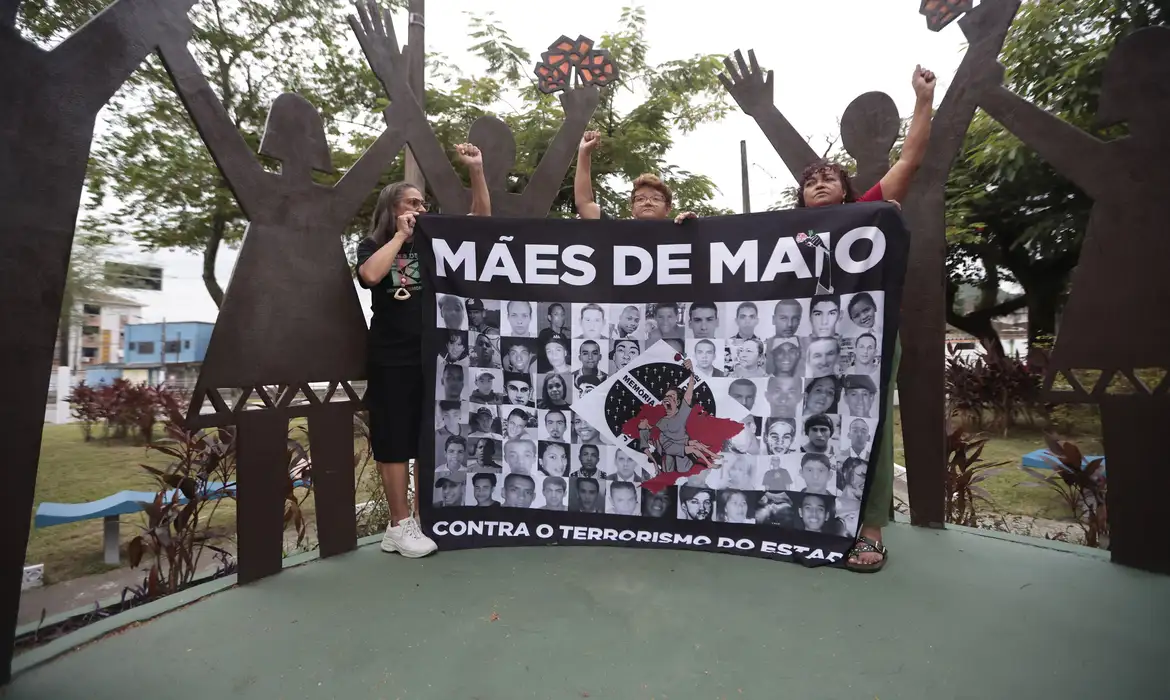
Final report: national project strengthens mothers and relatives of victims of police violence in four states
This initiative gathered mothers from Bahia, Ceará, Rio de Janeiro, and São Paulo in meetings, audiovisual training, and production of narratives on state violence
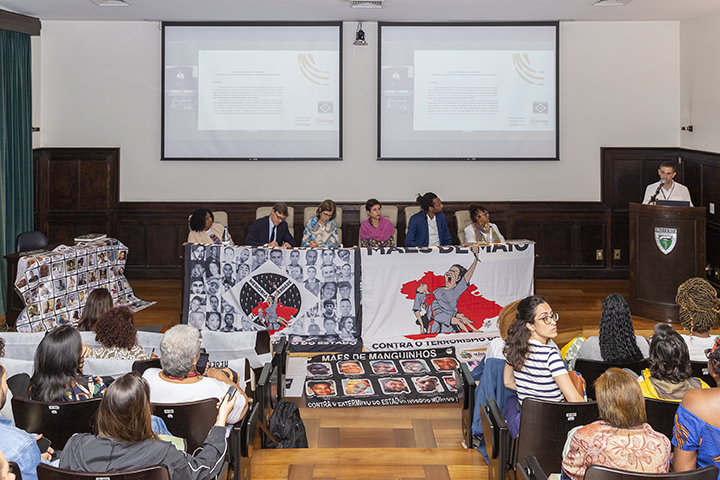 Foto do Encontro Nacional
Photo of the National Meeting
After two days of activities, the project Strengthening the Reach and Impact of Human Rights Movements in Brazil was concluded with results that expanded the articulation between movements of mothers and relatives of victims of State violence. The initiative was meant to bolster political training, memory strategies, advocacy, and communication in different parts of the country’s territory.
Carried out in a partnership between the Independent Movement “Mães de Maio”, Conectas Direitos Humanos, and CAAF/Unifesp, the project gathered movements from Bahia, Ceará, Rio de Janeiro, and São Paulo, expanding exchanges between groups that for years have turned grief into a fight for justice.
Read more

Find out more:
Over the course of the project, eight mothers worked as social researchers, two per state, and took part directly in the construction of activities, systematization experiences, and the preparation of mobilization strategies.
Among the main activities carried out, the project promoted a national meeting, four regional meetings, in the four participating states, in addition to a virtual international event, gathering representatives of movements and organizations from other countries to discuss experiences of resistance, justice, and the fight against state violence.
Another core axis was the strengthening of communication as a mobilization tool. Participants went through an audiovisual production workshop, which offered practical training in audiovisual language, script writing, recording, and narrative construction.
As part of this process, four brief and independent videos were produced, made by the mothers themselves from the four participating states. The materials breach topics such as memory, structural racism, police violence, self-care, and collective resistance.
Check out the videos:
Released on social media by the movements themselves, the videos reached over 19,000 organic views, expanding the public circulation of these narratives and strengthening communication strategies produced from the territories.
The conclusion of the project leaves a legacy of a more connected network between mothers’ movements, new advocacy tools, and a bevy of experiences that restates how these women are at the core of reporting state violence and the defense of justice and non-repetition.
Check out the final project report here in Portuguese and Spanish and follow the main results of a process that has strengthened mother and relative networks and expanded advocacy strategies in the fight against state violence.