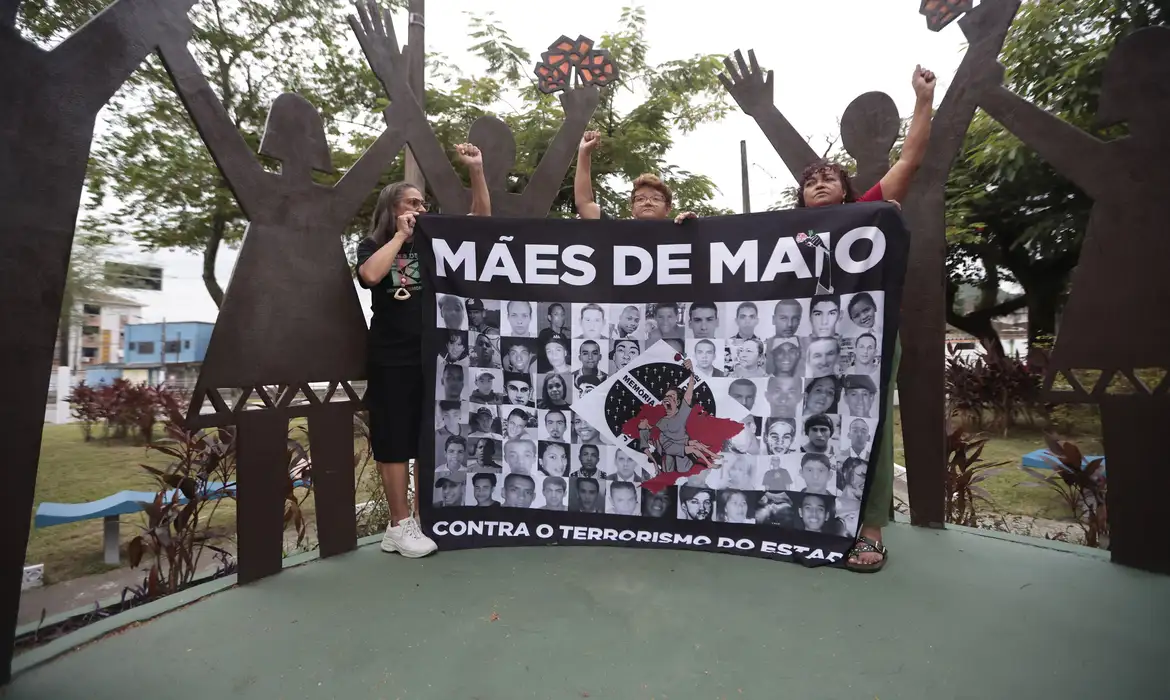
Smell of Diesel: a film uncovering State violence in Maré and Penha
In an interview with Conectas, the directors of the documentary discuss the local residents’ fight for memory and access to justice
“At a structural level our country is a racist one. Black and low-income communities still lack even the most basic human rights.”
This statement made by Gizele Martins, one of the directors of the documentary, Cheiro de Diesel (‘Smell of Diesel’), accurately captures the reality in territories where public security operates according to a rationale that leads to death and rights violations.
The feature film, directed by Gizele Martins and Natasha Neri and a winner at the 2025 Festival do Rio—one of Latin America’s largest film events—sheds light on the reality that residents of favelas such as Maré and Penha have known for decades: militarization is not the exception, but is in fact an ongoing policy of control, violence, and denial of rights.
Read more

The film depicts the impacts that the State’s armed presence has had on the lives of residents of Rio de Janeiro’s north zone during periods of military occupations and under the federal Guarantee of Law and Order (GLO) decree from 2014 to 2015, as well as during operations by the Armed Forces from 2017 to 2018.
Through residents’ accounts of police operations, military occupations, torture, rights violations, and impunity, the documentary shows how the State’s armed presence has forever changed life in the favelas, leaving lasting marks on both the territories and their families.
“Fear, nightmares, depression, and symptoms of post-traumatic stress are common among those affected by State violence, and are even more severe in cases where crimes have been committed by Armed Forces personnel, since victims of torture and ill-treatment are usually sent to military barracks before being taken to police stations,” says Natasha Neri, who also directed the feature film.
Cheiro de Diesel exposes the interconnected nature of structural racism, police lethality, impunity, and the denial of rights. At a time when Rio de Janeiro continues to be plagued by massacres, allegations of obstruction of investigations, and demands for truth, justice, and reparations, the film also challenges narratives, and focuses on the voices of those who live with State violence.
In this interview with Conectas, Gizele Martins and Natasha Neri reflect on the film as a vehicle for memory, denunciation, and standing up to institutional violence, as well as on what needs to change in order to break with the rationale that treats favelas as war zones.
Conectas: In Cheiro de Diesel, militarization is depicted not as an isolated incident but as an ongoing policy in the favelas. How does the film portray the relationship between the State’s armed presence, structural racism, and the ongoing production of violence in these territories?
Gizele Martins: At a structural level our country is a racist one. Black and low-income communities still lack even the most basic human rights. Favelas and peripheral communities are the result of this inequality. We, who live in the favelas, have built and rebuilt them without any rights at all. Instead of guaranteeing the right to life, the Brazilian State has adopted the role of controlling our lives and our territories. Militarization is part of this process of controlling lives and territories. This is yet another tool for controlling bodies and territories. In other words, militarization is a policy to kill, it is not incidental.
Conectas: The documentary shows how operations and occupations leave permanent scars on the lives of those living in Maré and Penha. In your opinion, what are the most profound yet least visible impacts of police violence on people experiencing this on a daily basis?
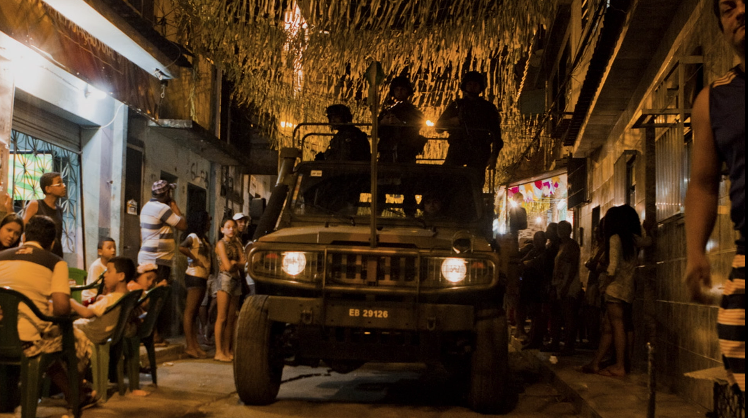
Natasha Neri: Imagine having tanks on your doorstep, barricades on your way from home to work or to school, and being searched at checkpoints by members of the Armed Forces. It’s like a war zone, but sadly it is the day to day reality of thousands of people living in the Maré favelas, which were occupied by the Armed Forces for one year and three months, between April 2014, just before the World Cup, and June 2015, as well as for the residents of dozens of favelas occupied during the GLO Operation Rio de Janeiro, from July 2017 to December 2018.
The daily trauma caused by the presence of heavily armed military personnel and tanks in the lives of residents of the favelas has been—and continues to be—rendered invisible. The film seeks to shed light on the layers of psychological violence, threats, and censorship experienced by residents and human rights defenders, as well as violent stop-and-search operations, torture, and abuses of power carried out by Armed Forces personnel. The documentary uses aesthetic and narrative devices that enhance the sensory dimension of the violations, drawing on the memories of its protagonists and on the lasting scars left by the violence and the absence of access to justice in their lives.
Fear, nightmares, depression, and symptoms of post-traumatic stress are common among those affected by State violence, and are even more severe in cases where crimes have been committed by Armed Forces personnel, since victims of torture and ill-treatment are usually sent to military barracks before being taken to police stations, which is what happened to the young people tortured in the Sala Vermelha case.
Furthermore, the families of victims of the Armed Forces face far greater obstacles in accessing information, participating in proceedings, and in securing the criminal accountability of those responsible, given that investigative and legal proceedings are handled within the Military Justice system, following a number of legal changes, such as Law 13491/2017, enacted by President Michel Temer, which transferred jurisdiction for crimes committed by military personnel against civilians—including homicide—to the military justice system, contrary to rulings by the Inter-American Court of Human Rights and international human rights standards regarding access to justice for victims of abuse of power.
The absence of information regarding investigations, the failure to hold those involved criminally accountable, and the lack of reparations are rights violations that are repeatedly experienced by victims in cases involving members of the Armed Forces, making families even more vulnerable and exacerbating and perpetuating the trauma they already endure, after years spent seeking basic information about the cases only to see them archived.
Conectas: When the Military Justice system archives cases, or when the official version of events takes precedence over victims’ accounts, what message is the State sending to families and the people who live in these areas?
Gizele Martins: The film explores the idea that all of us who live in the favelas are victims of this process of militarization and control. Families who have lost loved ones endure countless proceedings—to prove their names, surnames, and that they had a fixed address. They struggle to prove that no Black person, no favela resident should be murdered in a country whose founding principles include the guarantee of the right to life. The archiving of cases is yet another stage in this brutal process carried out by the State, another expression of this disrespect toward families. Archiving cases is a display of power—it shows that our dead have no voice.
Conectas: Accounts given by families, survivors and local residents are often discredited, while police narratives are presumed to be true. How can documentary filmmaking function as a tool for memory, for the production of memory, and for confronting this unequal dispute over narratives?
Natasha Neri: The occupation of favelas by the Armed Forces generally receives support from corporate media outlets and from the White population living in other parts of the city, because it is framed as a kind of ‘pacification’, when, in fact, residents suffer a range of human rights violations on their own doorsteps and are subjected to the terror of a war machine that should never have been used for urban policing. Media coverage of these occupations by the Armed Forces usually views the favelas from the outside and from helicopters overhead, as depicted in the film, constructing the narrative that the occupations are a retaking of territory and will somehow bring a sense of security.
Furthermore, during investigative and legal proceedings the versions of events presented by military personnel are given greater credence. Military police investigations are conducted by members of the Armed Forces who have neither the independence nor impartiality required to carry out an effective investigation, and the few cases that come before a military court are tried by 5 military judges and one civilian judge. As a result, none of the cases depicted in the film have been properly investigated. For example the Salgueiro Massacre in which 8 people were killed when soldiers concealed in a wooded area opened fire on residents. In the Sala Vermelha case when 11 young people were barbarically tortured in Penha and at a military barracks on the base in Deodoro, investigations were archived, even though forensic examinations for torture and ill-treatment confirmed the acts of torture, following the implementation of the guidelines set out in the Istanbul Protocol. In the case of Vitor Santiago—the corporal who fired at the car the young man was traveling in in Maré in February 2015 was acquitted by the Military Justice system in 2020.
Our film portrays the everyday violence of militarization through the perspective and lived experience of residents of several occupied favelas, such as Maré, Penha, Alemão, Salgueiro (in São Gonçalo), and Acarí all of which have been subjected to large-scale operations by the Armed Forces. Voices that are usually silenced by the State and ignored by mainstream media are the principal source of the film. Since 2014, the directors have been documenting the impacts of militarization by the Armed Forces in the favelas depicted in the film and are giving voice to those who have directly suffered from the violence and censorship imposed by the Armed Forces. In this way, we seek to contribute to preserving the memory of the violations suffered by the residents of favelas during GLO operations, and also to supporting the fight for justice and reparations for victims’ families.
Conectas: If the film calls on society to acknowledge that there is a “dictatorship within democracy” in the favelas, what do you see as the most urgent steps needed to break this cycle—in the justice system, in oversight of the security forces or in reparations for victims?
Gizele Martins: First of all, Brazil needs to provide reparations to the Indigenous and Black populations of this country. Reparations are needed for all of us who live today in territories of resistance. We are still living on the bare minimum. Next, it must be acknowledged that genocides are taking place in Brazil and that there is a policy of militarization aimed at controlling bodies and territories. The crimes of slavery and the crimes of the dictatorship must be acknowledged and reparations made. In this sense, favelas must also be seen as places where the remnants of slavery still exist and where the dictatorship persists.
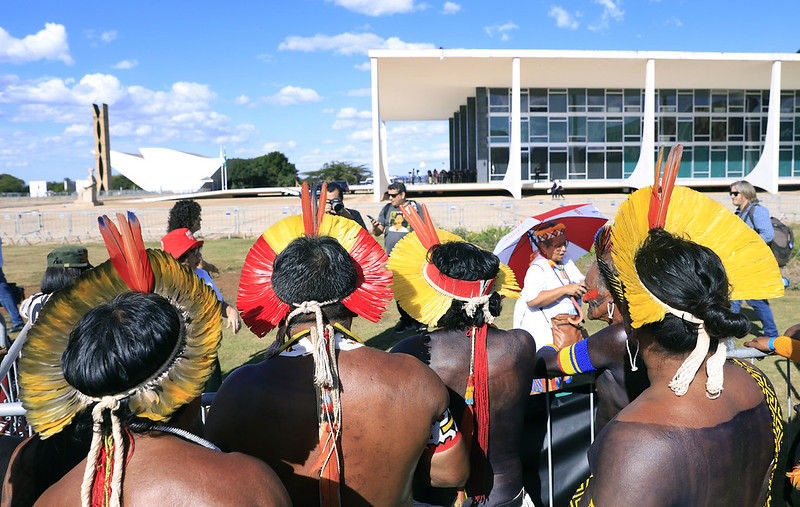
Natasha Neri: I believe that Guarantee of Law and Order operations (GLO) should not be decreed for the use of the Armed Forces in urban policing, given that this is not a constitutional duty of the military. In addition, the Supreme Federal Court should rule unconstitutional recent legislation that transferred jurisdiction over cases involving crimes committed by soldiers against civilians, and by civilians against military personnel, to the Military Justice system, in ADIs 5.032 and 5.804 and ADPF 289.
Furthermore, the victims and families of those affected by violence committed by the Armed Forces have the right to full reparations, including financial compensation, psychosocial support, public apologies, and recognition by the Brazilian State of these acts of violence. If we live in a democracy, the Brazilian State cannot be complicit in the continued use of authoritarian practices by the Armed Forces and has the obligation to provide reparations to victims and to prevent further violence, ceasing to use federal military forces in urban policing. The favelas cannot go on being used as laboratories for necropolitics or as electoral platforms in an election year or for major events. The favela wants to live—free from tanks and soldiers on the doorstep.
Further Information
About the Directors
Natasha Neri is a journalist and filmmaker. She holds a master’s degree in Anthropology and Human Rights and is a researcher in Criminal Justice. She directed the feature film Auto de Resistência (‘Police Killing’), winner of É Tudo Verdade (2018), shortlisted for the Oscar for Best Documentary Feature and nominated for the IDFA Human Rights Award. She has also directed more than 20 impact-driven short films.
Gizele Martins, born and bred in the Maré favela, is a journalist, holds a doctorate in Communication, and is a community communicator and human rights defender. She won the Vladimir Herzog Award (2024), and is the author of the book “Militarização e Censura – A luta por liberdade de expressão na Favela da Maré” (‘Militarization and Censorship – the fight for freedom of expression in the Maré favela’). CHEIRO DE DIESEL is her first film.
About the film
The national premiere of Cheiro de Diesel was on 2 April. It is currently screening at Espaço Petrobras de Cinema.
Tickets are available via this link