Superior Court of Justice (STJ) once again judges the accountability of the State for the May Crimes
Court analyzes whether the May Crimes constitute severe human rights violations, which would eliminate the statute of limitations on State accountability
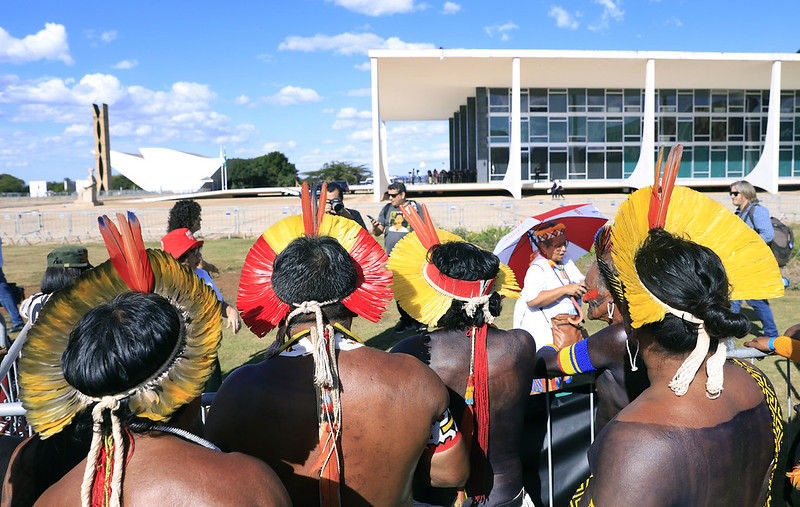
 Fachada do edifício sede do Superior Tribunal de Justiça (STJ)
This Wednesday (12th), the Superior Court of Justice (STJ, acronym in Portuguese) is resuming its judgment on Special Appeal no. 2.172.497/SP, which discusses the recognition of the 2006 May Crimes as severe human rights violations. The decision could represent a legal milestone by defining that the civil accountability of the State for these violations cannot be time-barred, creating a path for reparation measures for victims and their relatives, in addition to strengthening non-repetition guarantees.
Proposed by the São Paulo State Prosecution Office (MPSP, acronym in Portuguese) in 2018, the action attempts to hold the State accountable for the deaths that occurred between May 12 and 21, 2006, a period notable for a series of executions that resulted in over 500 deaths, in addition to forced disappearances and hundreds of people injured. The case also requests the adoption of transition justice measures, including the guarantee of the rights to truth, memory, and reparation for victims and their relatives.
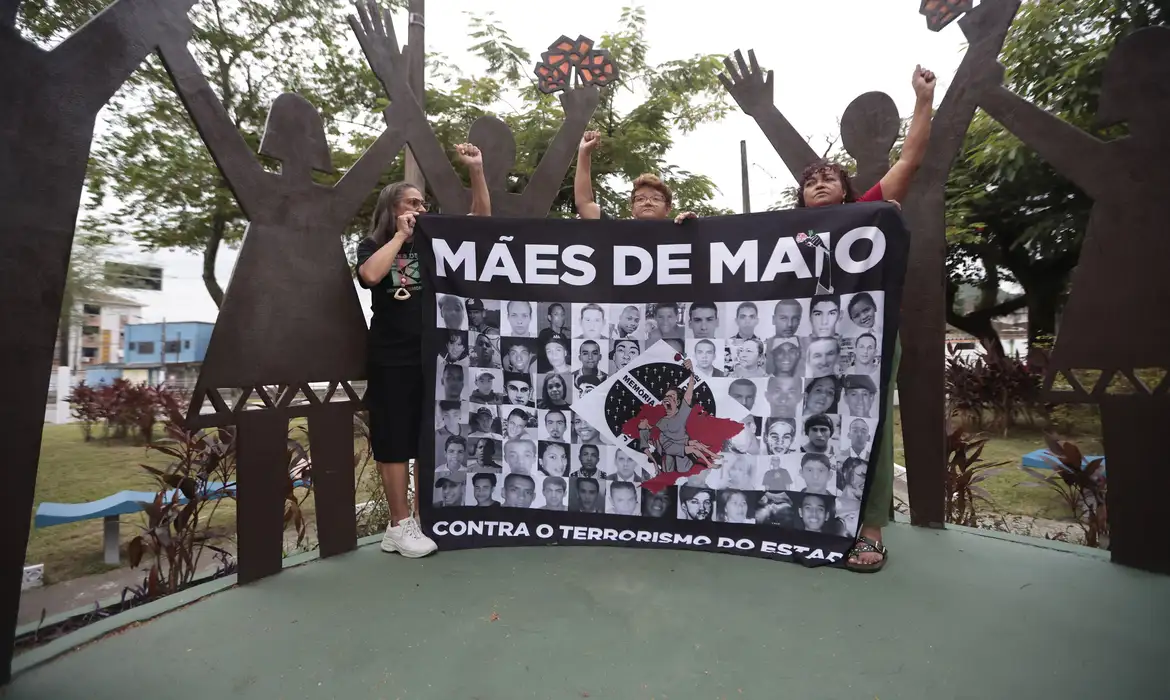
Conectas and the Mães de Maio Independent Movement are part of the case as amici curiae, defending that the May Crimes should be recognized as severe human rights violations and crimes against humanity. The organizations claim that, in light of the Federal Constitution, international treaties ratified by Brazil and case law of the Inter-American Court on Human Rights (IACHR), these violations cannot be time-barred and force the State to permanently investigate facts, hold those involved accountable, and offer full reparations to victims.
Read more

Conectas’ participation also extends to the Universal Human Rights System. In May 2026, the organization and the Mães de Maio Independent Movement filed an urgent appeal before mechanisms of the United Nations (UN), denouncing the persistence of impunity, investigative flaws, and the risk of time-barring of the case. In the document, the entities request the international monitoring of the trial and stress the obligation of the Brazilian State to assure justice, reparation for victims and effective measures to prevent the repetition of these violations.
Up until now, two justices have handed down their votes. The rapporteur, justice Teodoro Silva Santos, requested the dismissal of the time-barring and stated that “time-barring cannot be applied in such severe cases, for this would perpetuate impunity and compromise the dignity of victims”. In his vote, he highlighted that the case law of the STJ and of the Inter-American Court on Human Rights (IACHR) acknowledges the absence of a statute of limitations on severe human rights violations. There are seven more justices yet to vote.