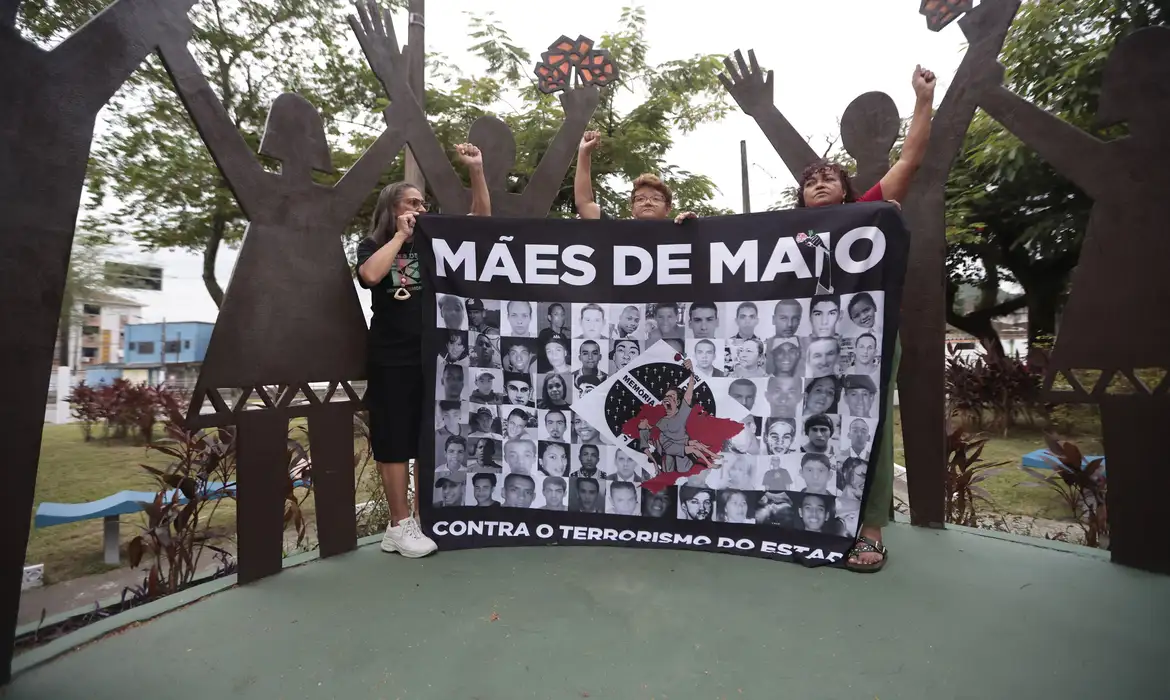
This Wednesday (10), the STJ judges a lawsuit that may recognize the Crimes of May 2006 as severe human rights violations
The deaths that occurred in the Baixada Santista region may no longer be time-barred
 Dona Débora, leader of the Mothers of May Movement, in an interview with Conectas on the Crimes of May.
This Wednesday (10), starting at 02:00 p.m., the Superior Court of Justice (STJ, acronym in Portuguese) will resume the judgment of the special appeal (Resp no. 2172497/SP) referring to a Public Civil Lawsuit filed by the São Paulo State Prosecution Office (MP-SP) to recognize the Crimes of May 2006 as severe human rights violations and, consequently, declare the absence of a statute of limitations for the purposes of civil accountability and adoption of non-repetition measures. The appeal was lodged in March of this year, but removed from the docket after rapporteur justice Teodoro Silva Santos asked for a stay of judgment in order to examine the case records.
Crimes of May is the name given to the slaughter perpetrated in the Baixada Santista region, in the state of São Paulo, between May 12 and 21, 2006, which took over 564 lives, leaving another 110 wounded, and with at least four forced disappearances. The Special Appeal currently pending before the STJ was lodged by the São Paulo Public Defender’s Office and is monitored by Conectas and Movimento Independente Mães de Maio, which are amici curiae in the case.
Even after 20 years of a tireless struggle by victims’ families and social movements for justice and reparation, the State was not yet duly held accountable for the crimes perpetrated, as well as for its omissions and failures in the investigation of summary executions and forced disappearances. The mothers who lost their children still have no answers and no sort of medical, psychosocial, or economic assistance.
Read more

The lawsuit was filed by the Social Inclusion Department of the São Paulo State Prosecution Office, recognizing the severity of the state’s failure in holding public security officers accountable and protecting the most relevant legal assets, such as life and physical integrity, demanding individual compensation to the relatives of the victims – moral and material – and collective, in addition to the fulfillment of the obligation to act, consistent with meeting the requests of Truth and Justice, under the framework of Transitional Justice.
The recognition of the Crimes of May as severe human rights violations is moored on the very constitutional bulwark of protecting human dignity, which does not establish a statute of limitations for its protection. It is also based on the understanding of international treaties and conventions of which Brazil is the signatory, such as the American Convention on Human Rights and the International Pact on Civil and Political Rights, as well as consolidated case law of the Inter-American Court on Human Rights (I/A Court HR). With this characteristic assured, there is a permanent obligation to hold the Brazilian state and its operatives involved in the deaths accountable. Likewise, the victims’ families maintain their right to reparation and compensation.