Police killings: when public policy becomes a policy of death
In 2025, more than 6,000 people died in police operations in Brazil. The state of São Paulo recorded 834 deaths in its deadliest year to date
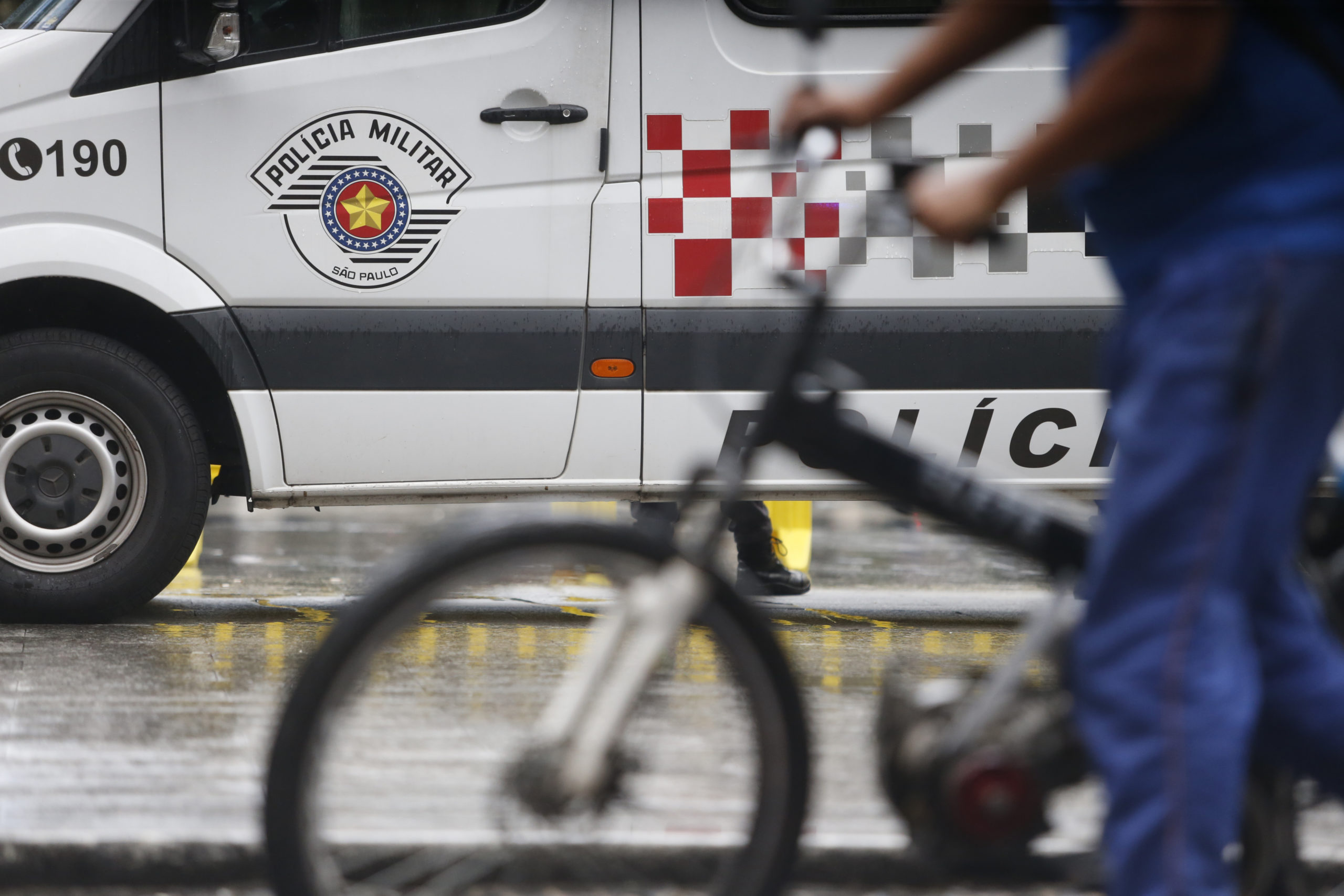 Foto: Paulo Pinto/Agência Brasil
When does public security become a policy of death? The latest data from the Ministry of Justice and Public Security show that in 2025, Brazil recorded 6,519 deaths resulting from police action, maintaining an annual level of over six thousand lives lost, for four consecutive years. Far from being just “operational fatalities” these figures point to the consolidation of political choices that normalize the use of lethal force as a tool for managing public security. A choice with high human, democratic, and economic costs.
In absolute terms, these incidents have historically been concentrated in densely populated states with a strong police presence. In October 2025, a police operation in the Alemão and Penha complexes, in Rio de Janeiro, left 121 people dead, making it the deadliest in the state’s history. The number even surpassed the Carandiru massacre, in 1992, when 111 people were killed inside a prison complex in São Paulo.
Bahia and Rio de Janeiro have taken turns in the lead, while São Paulo, Pará, and Ceará usually rank among the states with the highest figures.
Read more

A different picture emerges when the rate of 100,000 inhabitants is considered: smaller states, with localized conflicts (such as Amapá, Sergipe, Goiás and Pará itself, in certain periods) tend to stand out, indicating that the intensity of violence is not only determined by the size of police forces but also by the type of operations authorized, the design of internal incentive structures, and the degree of civilian oversight in place.
Political signals from the top, such as the tone of public discourse, tolerance regarding “excesses”, and the prioritization of budget resources for visible operations over investigations, create an environment in which state-level leaders and mid-level commanders feel authorized to expand their use of force. The result is homogeneous in rationale but heterogeneous in its expression: from large-scale operations in densely populated urban areas to repeated incursions into mid-sized municipalities, with spikes in lethality following the deaths of officers or during cycles of territorial ‘sweep’ operations.
São Paulo state’s deadliest year to date
Figures released by the Public Security Secretariat in São Paulo confirm the national trend: of the last six years, 2025 was the state’s deadliest to date, with 834 deaths.
Another phenomenon shows that police lethality is no longer concentrated on the capital or along the coast: the relative share of incidents involving battalions in the interior of the state is increasing. In 2025, 40% of deaths occurred in inland cities; in 2024, that figure was 31.7%. The expansion of lethality into the interior has been driven mainly by the regions of Campinas and Piracicaba. In general, these surges occur during prolonged operations launched after high-profile incidents, with little transparency regarding planning, objectives, rules of engagement, and the evaluation of results.
Local experience also shows that evidence-based policies save lives. Both lethality and reports of abuse have declined where body cameras have been adopted with broad coverage, continuous recording, civilian oversight, and clear technical criteria. When these initiatives suffer setbacks, the curve once again rises, showing how administrative decisions continue to shape a public security policy that prioritizes lethal force over protecting lives.
The pattern of lethality
The profile of the victims follows the national pattern: most are young Black people from underprivileged regions and favelas, who are often targeted in police stops motivated by racial and territorial stereotypes. This selectivity shows that police lethality functions as a policy that determines which lives are more exposed to lethal risk in interactions with the state. Furthermore, the low clearance rate for homicides and the fragility of independent investigations in cases of death resulting from police intervention foster impunity and undermines the state’s ability to reduce crime.
This model rests on three pillars: repeated shock operations—almost the only response to complex problems; limited transparency of data, which delays public oversight and hinders comparisons; and ineffective accountability, with slow-moving investigations, forensic examinations linked to police institutions, that fail to properly preserve crime scenes, and little effective accountability. In states where these factors are combined with official rhetoric amounting to a “license to act,” the number of deaths tends to soar, and they remain at the top of the rankings year after year.
The insistence on lethal force does not deliver what it promises. Studies in Brazil and elsewhere show that more deaths do not mean fewer crimes. On the contrary, this deepens distrust between communities and the State, weakens prevention efforts, hinders investigations, and feeds back into cycles of violence.
From a legal standpoint, this situation runs counter to the 1988 Constitution and to international human rights standards, which require legality, necessity, proportionality, precaution, and accountability in the use of force. Any operation that ends in death and is not investigated promptly and independently signals institutional tolerance of the unacceptable.
The number of annual deaths resulting from police operations in Brazil cannot be treated as trivial data. Breaking this cycle requires pressure at both national and international levels, which is why we continue to engage in coordination and advocacy. The implementation of public policies to reduce lethality depends of governmental choices that must be subject to democratic and legal oversight. The challenge is to build a public security model that is aligned with democratic principles, guaranteeing rights and preserving lives.