Organizations call on the UNFCCC to recant on their letter that threatens an indigenous protest at COP30
Simon Stiell, the Executive Secretary of the UNFCCC, is accused of encouraging repressive actions against indigenous peoples during the conference in Belém
 **Tradução e versão reduzida:**
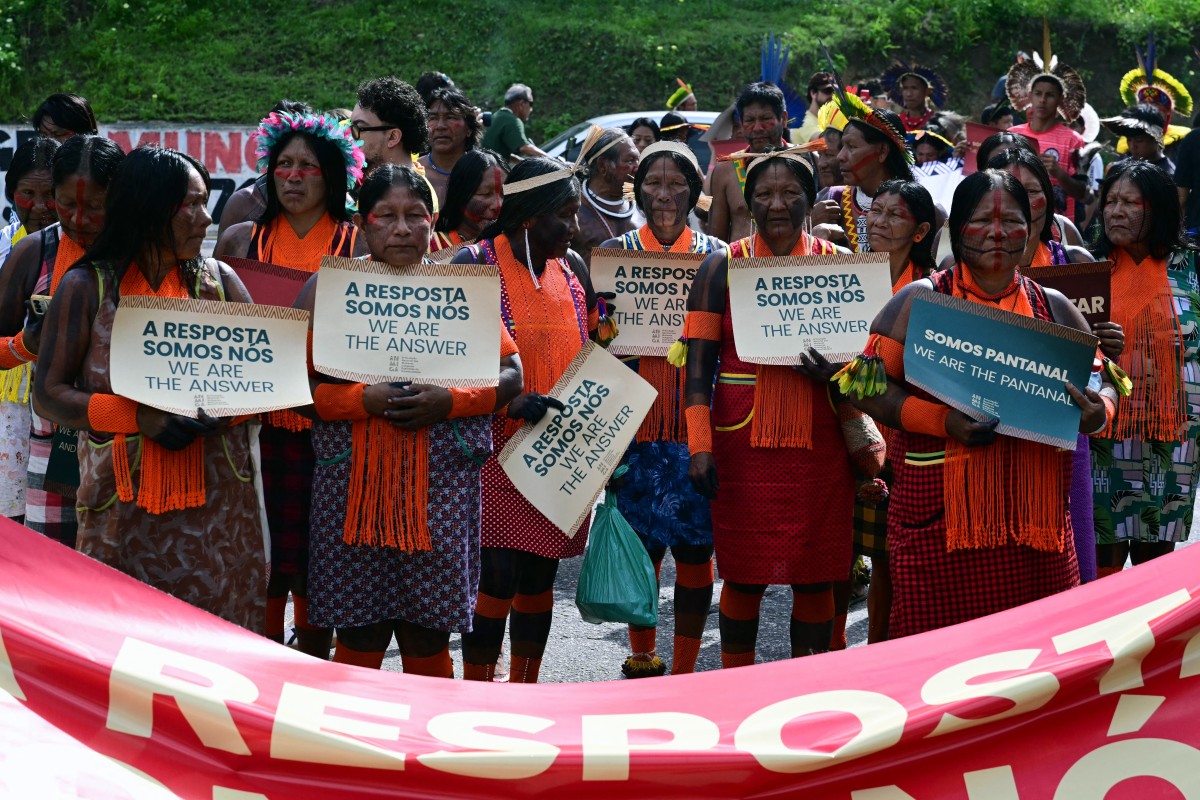
Indígenas participam da manifestação “Marcha Global dos Povos Indígenas” durante a COP30, em Belém (PA), em 17 de novembro de 2025. (Foto: Pablo Porciuncula / AFP)
**Tradução e versão reduzida:**
Indígenas participam da manifestação “Marcha Global dos Povos Indígenas” durante a COP30, em Belém (PA), em 17 de novembro de 2025. (Foto: Pablo Porciuncula / AFP)
In an open letter, over 200 human rights, environmental, and indigenous people’s organizations, including Conectas, communicated with the executive secretary of the United Nations Framework Convention on Climate Change (UNFCCC), Simon Stiell, with a call for the immediate reversal of a note sent to the Brazilian government on November 12th.
The UNFCCC document asked the Brazilian presidency of COP30 to reinforce the presence of uniformed security forces around the event and to intervene in order to disperse demonstrations after an alleged security incident at the conference site. According to the signatory organizations, the orientation intensifies a global tendency of repression against legitimate demonstrations and intimidation against environmental advocates, indigenous peoples, and social movements.
The letter led to a significant increase in security forces in Belém, generating an unsafe environment that directly affected indigenous peoples, activists, and members of civil society that participate in COP30.
Read more


The organizations highlight that indigenous peoples asking for the recognition of their land and rights do not represent a threat. Indigenous women seeking access to climate negotiations were also treated as a risk, which repeats patterns of criminalization of environmental defenders already seen in Brazil and in other countries.
The signatories state that the UN is legally obligated to protect fundamental human rights, such as the freedom of peaceful assembly and freedom of expression. To them, the intensified and organized presence of indigenous peoples in Belém reinforces the legitimacy and ambition of climate negotiations and should not be dealt with as a security problem.
In addition to the immediate impacts, the organizations warn that the note from the UNFCCC creates a dangerous precedent. Even if the Brazilian government does not expand repression, the letter could be used as grounds for future host countries to restrict protests and limit the participation of civil society in climate conferences.
The organizations ask for Stiell to public a public statement at the start of the second week of COP30 reverting the effects of the letter, requesting reduced law enforcement presence around the conference and restating the UNFCCC’s commitment to the rights of indigenous peoples and the right to peaceful demonstrations.