COP30: human rights at the center of the climate debate in Belém
With a focus on adaptation, COP30 in Belém is likely to address delays in global climate goals, with increased pressure by civil society for concrete responses to the crisis
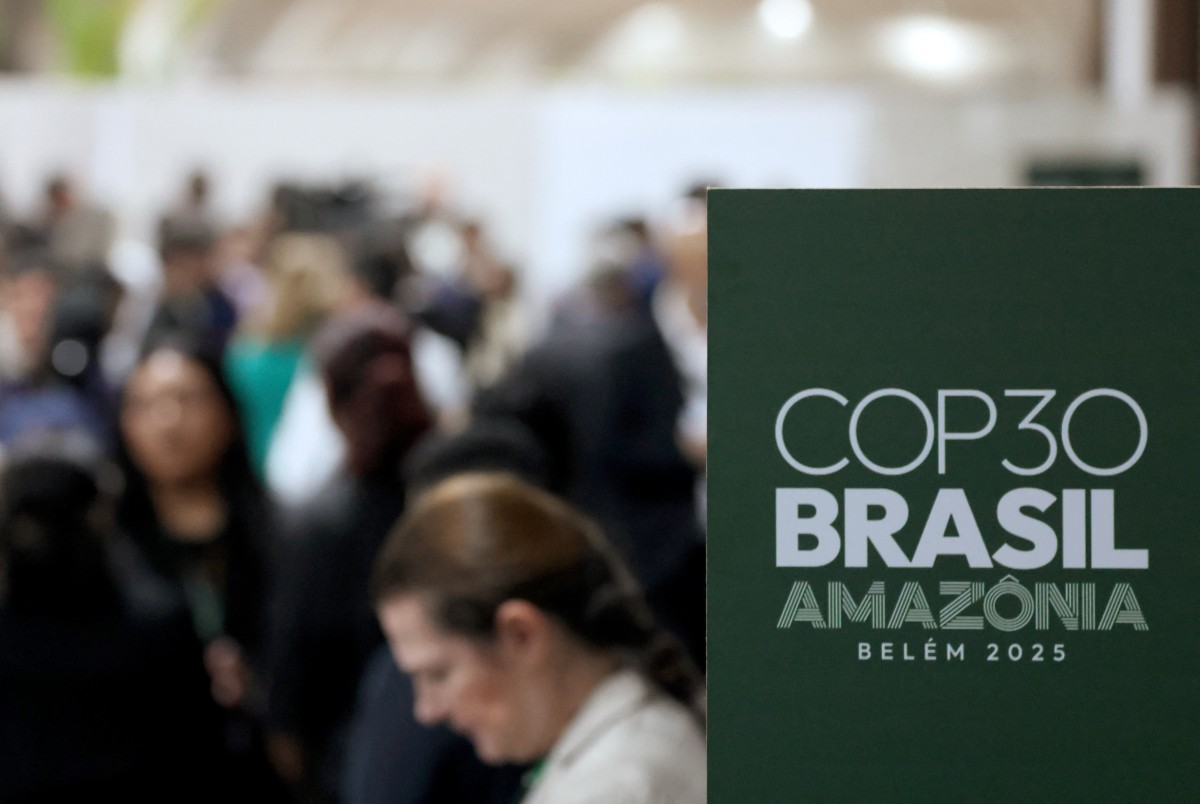 View of the logo of COP30 UN Climate Change Conference, in Belem, Para state, Brazil, taken on November 6, 2025. (Photo by Ludovic MARIN / AFP)
Whereas funding was the central theme of COP29, COP30 in Belém is expected to place adaptation at the center of the climate agenda.
This theme has been gaining ground in light of delays and the lack of ambition in Nationally Determined Contributions (NDCs)—each country’s pledge to reduce emissions and curb global warming, under the Paris Agreement.
Most nations, including the main emitters and those most responsible for the climate crisis, did not submit their 2035 targets by the deadline. This failure reinforces the urgent need for more assertive action by civil society to ensure its demands are at the center of the negotiations and that the proposed solutions actually respond to local conditions, are effective, and are underpinned by justice and human rights.
Read more


It is against this backdrop that Indigenous and quilombola peoples have released their own NDCs, in an assertive gesture to ensure their voices, knowledge, and solutions for the climate crisis are acknowledged and put into practice.
COP30 is a call to action for governments to ensure that the voices of those most affected by climate change are heard. Conectas, along with partner organizations, is preparing for active and strategic participation, seeking to influence the negotiations and strengthen the leadership of civil society.
Key discussions for COP30
Adaptation is the headline agenda at COP30. The Global Goal on Adaptation (GGA) will be discussed to establish a set of 100 indicators responsible for measuring progress on adaptation, as well as the National Adaptation Plans (NAPs), and dedicated funding.
Climate funding remains a key theme. The conference will continue the “Baku-Belém Roadmap”, a plan to expand financial flows toward the proposed annual target (US$ 1.3 trillion), including discussions on the historical responsibility of developed countries and the nature of these resources.
Just transition is also a central theme. The Just Transition Work Programme–an initiative within the framework of the international climate regime—aims to consolidate a text that promotes a transition away from fossil fuels while integrating human rights language. There was some progress on this document during the technical meetings on climate change (SB62) held in June in Bonn, Germany, and it is an important guideline for the debates at COP.
Other agendas include the reform of the UN Framework Convention on Climate Change (UNFCCC). There is a consensus that this climate regime, created by the United Nations, has failed to deliver timely responses to combat climate change and meet the Paris Agreement target of keeping warming to below 2ºC, with efforts to remain below 1.5ºC.
In addition, despite criticism and the need for improvements, another important issue is reaffirming the very existence of the Framework Convention on Climate Change and multilateralism. This has become more crucial in the face of challenges such as the withdrawal of the United States from the Paris Agreement (along with the likely absence of the country’s delegation at COP30) and the rise of the global far right and the inherent threat this poses to democracy.
These debates are key to strengthening the capacity of the climate regime to respond to the crisis, particularly amid denialism and disinformation.
The role of civil society
Civil society’s participation at COP30 in Belém is vital, given the nature of democracy in Brazil, which contrasts with previous COPs. The accreditation zones are categorized as follows:
The Blue Zone is an accredited space where observer organizations, such as Conectas, can follow negotiations and hold parallel events. It also serves as a platform for representatives and local communities.
The Green Zone is open to the public but is also highly contested and can become tense. It is often taken over by sectors such as industry and fossil fuels. Nonetheless, the presence of bodies such as the Ministry of Human Rights and Citizenship (MDHC) acts to counterbalance discussions.
The Yellow Zone is a new initiative. It is a parallel space created by civil society. The People’s Summit led by social movements and traditional communities at the Federal University of Pará will be the central hub for meetings, actions, and the presentation of a document. Other spaces include the Climate Observatory’s COP Center, the Arayara Hub, and the People’s COP.
Challenges faced in participating in this COP include the low number of credentials issued by the UNFCCC and expensive accommodation, a common practice at large events, but one that hinders the participation of the very people who are most affected by the climate crisis in decision-making arenas. As an organization attending the event, we stress the need to ensure both the quality of this participation and the safety of activists.
Conectas at COP30: advocating for human rights
Conectas will be working strategically in all the COP zones. Our aim is to link the climate agenda to the human rights agenda, recognizing the interconnectedness between social justice and the socio-environmental agenda.
In the Blue Zone, we will follow Brazil’s negotiations as well as those of blocs such as the Sur Group, advocating for adaptation from a human rights standpoint (race, gender, class, and age) and for progress on the GGA indicators. Two parallel events have been confirmed: the first on Transformational Adaptation, from an antiracism and Global South perspective, in partnership with ISER, Geledés – Black Women’s Institute, Vozes Negras pelo Clima (Black Voices for the Climate), Rede por Adaptação Antirracista (Anti-Racist Adaptation Network), the World Adaptation Science Programme, Adaptation Fund, SOS Mata Atlântica, Instituto Decodifica, Clima de Política, Alana, Amnesty International, Casa Fluminense and Instituto Socioambiental. The second event will be in the Brazil Pavilion where we will discuss a just energy transition drawing on the experiences of South Africa, Brazil, India, and Argentina, as well as human rights violations, with the INCLO Network, using the case of wind farms in the Chapada do Araripe.
In the Green Zone, we will discuss the demand for Climate Adaptation with Justice and Human Rights, at an event in the MDHC (Ministry of Human Rights and Citizenship) Human Rights Pavilion, in partnership with a number of organizations, including Greenpeace Brasil, WWF-Brasil, Amnesty International, Global Justice, Instituto Socioambiental, Geledés – Black Women’s Institute. Another event will take place in the Belém+10 Pavilion, with the Latin American organizations ILEX and DAR. In addition, we will launch the Guide for Managing Socioenvironmental and Climate Risks and Opportunities in the Brazilian Financial Market, at the Consórcio Nordeste space.
In the Yellow Zone, we will be coordinating efforts to build agendas and dialogues, including events on environmental licensing, the role of human rights defenders in the energy transition, and discussions on financial institutes with the IDB. Our participation at the People’s Summit will be to support our partners—especially at key moments—seeking to advance and strengthen the demands of social movements and traditional peoples.
Conectas will be launching its advocacy document with a view to amplifying these voices and helping to shape negotiations. The document systematizes civil society’s key demands for a fair and effective COP. It is available via this link:
We want to make the most of the opportunities at COP30 to strengthen partnerships, grounding discussions in our own territorial context. Our aim is to influence both official and parallel debates, ensuring that socioenvironmental justice and human rights underpin the solutions to the climate crisis.