Belo Horizonte approves “Fast-track renewal of Environmental Licenses”
The Municipal Council for the Environment in Belo Horizonte has introduced self-declaration for low- and medium-impact projects, jeopardizing environmental protection and human rights
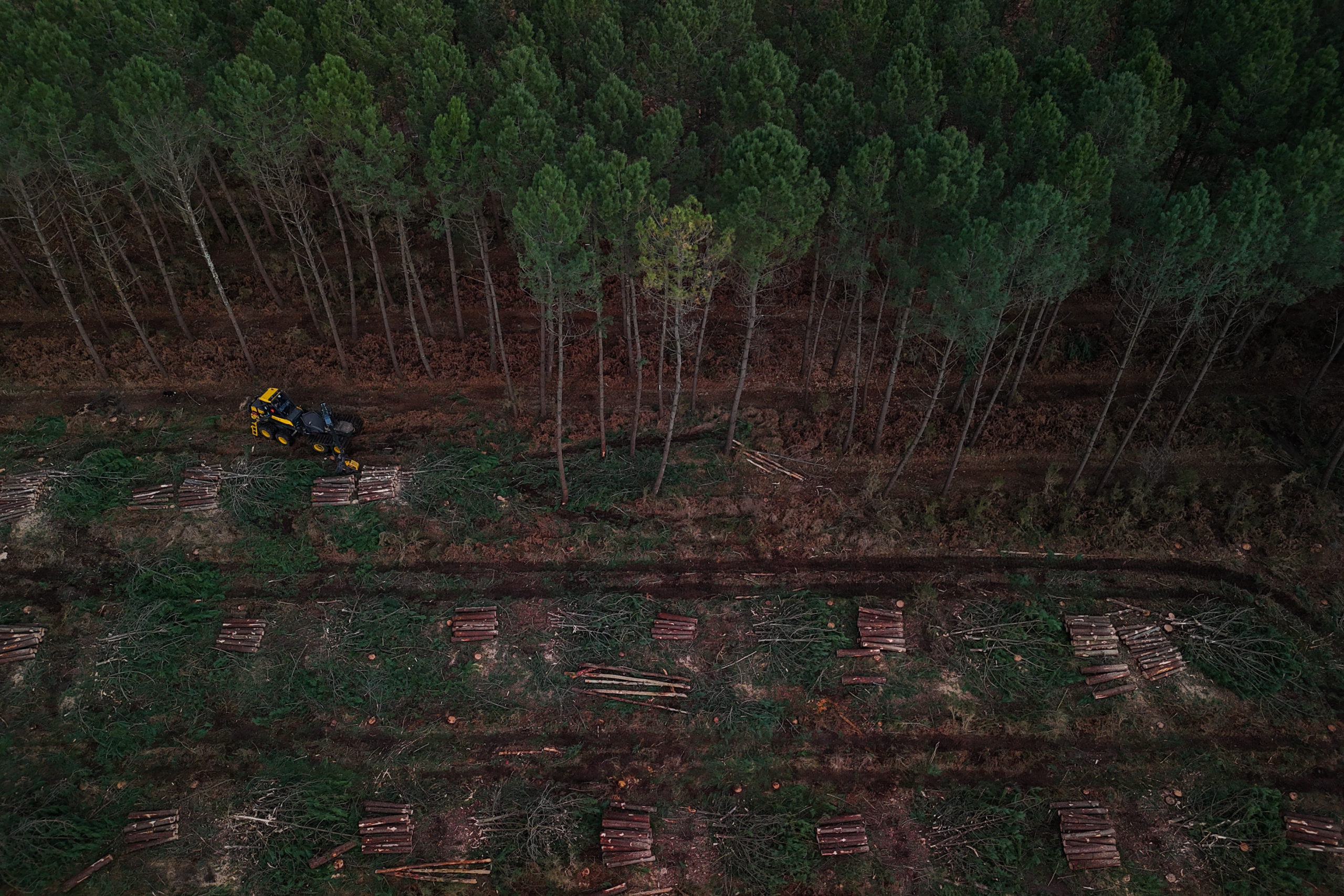 Renovação Expressa da Licença Ambiental representa desmonte de controle ambiental no Brasil. Foto: Philippe Lopez/ AFP
The recent approval of the rule establishing the “Fast-track Renewal of Environmental Licenses” by the Municipal Council for the Environment (COMAM) in Belo Horizonte is a serious warning sign regarding the movement to dismantle environmental oversight structures in Brazil. Under the guise of “modernization” and “speed” new rules have undermined key stages of assessment and inspection, jeopardizing environmental protection and human rights.
The rule permits a simplified system for renewing environmental licenses for projects with medium and low impact, removing the obligatory requirement of the Guidance for the Licensing of Impact Projects (OLEI), which entails site inspections and the submission of full documentation. In its place, developers can present self-declarations of environmental compliance, with inspections only being carried out by the Municipal Secretariat for the Environment (SMMA) if this is deemed necessary.
According to Thales Machado, advisor to the Defending Socioenvironmental Rights program, although it is presented as a measure to reward compliant developers and optimize resources, the rule reflects a national trend toward dismantling environmental regulations, in line with the recent General Environmental Licensing Law (Law No. 15.190/2025). “This easing of regulations threatens to exacerbate socioenvironmental crises and inequalities, while exposing populations that are already disproportionately vulnerable.”
Read more


Environmental Licensing: a mechanism under attack
Environmental licensing was created to prevent, mitigate, and compensate for environmental impacts. It involves technical analyses, impact assessments, conditions, and public participation. However, the easing of procedures—substituting rigorous processes with self-declarations—compromises the prevention of tragedies such as dam breaches, the contamination of rivers, and the destruction of ecosystems.
In Minas Gerais, a state marked by socioenvironmental tragedies, such as the collapse of the Fundão dam in Mariana and the Vale dam in Brumadinho, the undermining of environmental licensing is not just a technical issue; it is an ethical regression. The Vale dam, classified as “low risk,” collapsed in Brumadinho, leaving more than 270 dead and causing irreparable damage. “Even with a valid license in place, failures in oversight and monitoring allowed the disaster to happen, highlighting the need to strengthen—rather than weaken—prevention mechanisms,” Thales explains.
According to the expert, the current model of “a posteriori” oversight disregards the preventive nature of licensing. “Reducing analyses and making inspections contingent on the discretion of public authorities leaves territories and communities vulnerable to irreparable risks. Even projects with moderate impact can generate severe cumulative effects, compromising ecosystems and local communities.”
Organizations contest the easing before the Supreme Federal Court
Conectas Human Rights, in coordination with other civil society organizations, has denounced attempts to dismantle environmental licensing. Since the bill known as the “Devastation Bill” was introduced and approved by the National Congress, with all presidential vetoes overturned, we have been participating as amicus curiae in Direct Action of Unconstitutionality (ADI) 7919, filed by the Articulation of Indigenous Peoples of Brazil (APIB) and currently pending before the Supreme Federal Court (STF).
The action contests the lack of oversight over the License by Adhesion and Commitment (LAC) and the fast-track licensing model, pointing to violations of the Federal Constitution and of the human right to a balanced environment. It also denounces the exclusion of objective criteria in licensing decisions, replacing technical assessments with political convenience.
Climate justice and human rights: an inseparable cause
At the municipal level, measures, such as the new COMAM rule, replicate the same pattern of dismantling of environmental licensing under the pretext of greater efficiency and speed. However, this regulatory easing unravels decades of building preventive mechanisms and causes legal uncertainty, while also benefitting short-term economic interests at the expense of environmental balance. As a result, inequalities and longstanding violations are exacerbated, particularly in already threatened territories and among vulnerable populations who are excluded from decision-making processes. They bear the greatest impacts of environmental disasters, climate change, and the pollution of soil, air, and water.
Furthermore, undermining environmental licensing means Brazil is unable to meet international climate commitments, such as the Paris Agreement and ILO Convention 169.
Machado believes the municipality of Belo Horizonte and its leaders must reconsider the measure. “We will only be able to build sustainable, inclusive development and place human rights at the forefront through responsible and transparent environmental governance,” he concludes.