At the UN, indigenous leader denounces violations and asks for territory protection in Brazil
In pronouncements carried out this Thursday (the 24th) and Friday (the 25th), in Geneva, Switzerland, at the UN Human Rights Council, Bitaté Uru-Eu-Wau-Wau alerted of invasions, violence, and threats to the territorial rights of indigenous peoples and asked the Brazilian government for measures
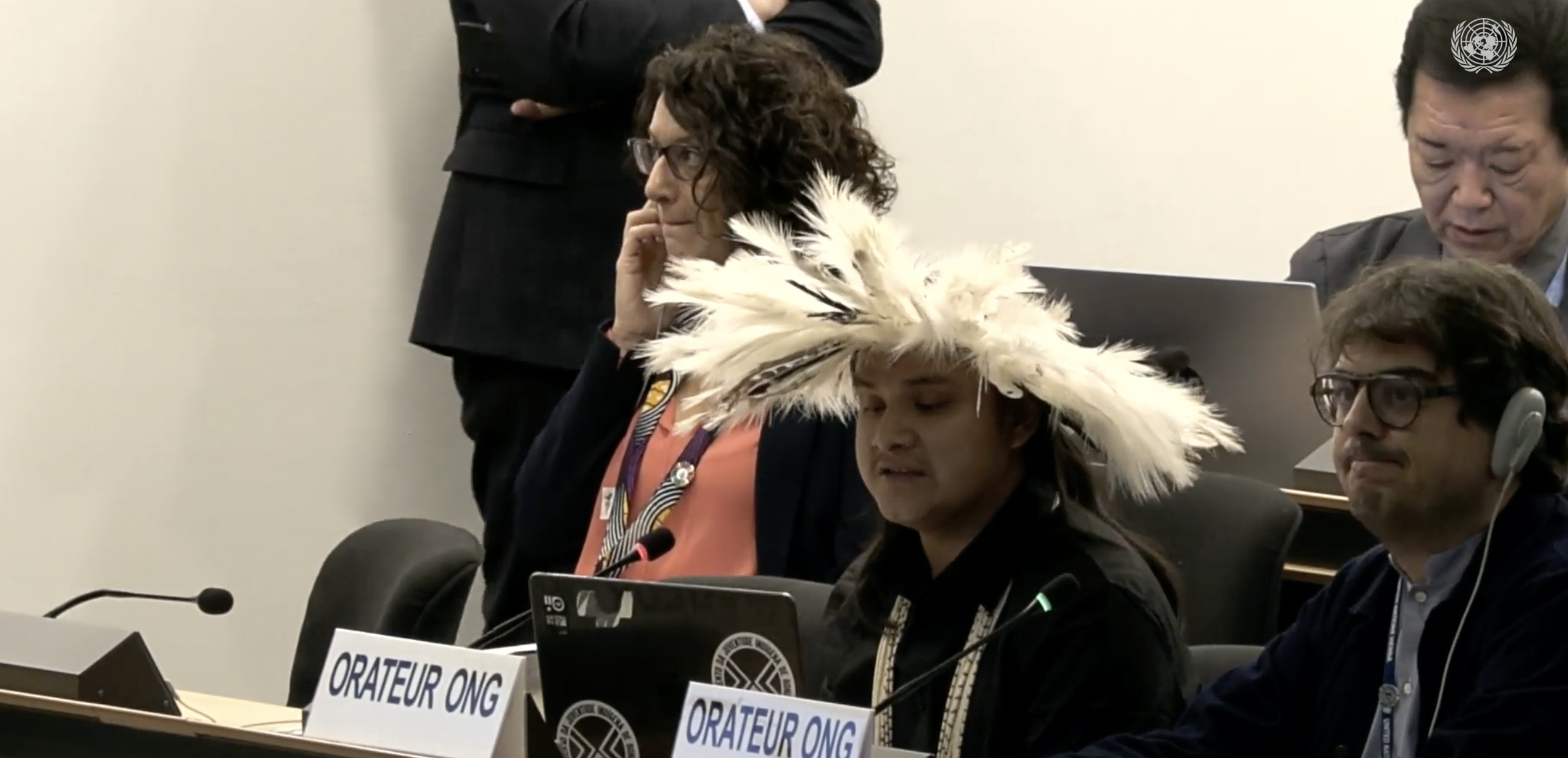 Foto: Re
Indigenous leader Bitaté Uru-Eu-Wau-Wau denounced, in two statements delivered last week at the United Nations (UN) Human Rights Council in Geneva, Switzerland, the human rights violations faced by indigenous peoples in Brazil. On Thursday (the 24th), Bitaté addressed the situation of the Uru-Eu-Wau-Wau Indigenous Territory in Rondônia. On Friday (the 25th), he discussed broader threats to indigenous territorial rights, including the impacts of legislation related to the “timeframe thesis” and the advancement of mining proposals on indigenous lands.
In his first statement, delivered on behalf of the Jupau Association, Conectas, and the Kanindé Association, Bitaté drew attention to the ongoing land invasions, environmental crimes, and violence in the Uru-Eu-Wau-Wau Indigenous Territory.
According to Bitaté, some of the current conflicts stem from a settlement established by the Brazilian government during the military dictatorship on the ancestral territory of the Uru-Eu-Wau-Wau people. Although the land demarcation was officially approved in the 1990s, the settlement remains one of the main sources of territorial conflict. According to Bitaté, the Brazilian government itself has already acknowledged the historical nature of this error.
Read more


The leader also pointed out that, although a 2023 court ruling ordered the removal of invaders, the area considered to be the site of the most intense conflict was excluded from the ruling, and the government’s negotiations have stalled.
The situation is particularly serious because the area is also home to indigenous peoples living in voluntary isolation. Bitaté stated that the communities themselves are responsible for protecting the land and the forest, even though their leaders’ lives are constantly at risk.
“Total disintrusion of the Uru-Eu-Wau-Wau Indigenous Land is an urgent measure of historical reparation.”
Speaking to the Human Rights Council, Bitaté called on the Brazilian government to immediately remove all intruders and ensure the territorial protection of the communities.
Timeframe thesis and mining in indigenous land
In the second statement, issued on behalf of Conectas and the Coalition of Indigenous Peoples of Brazil (Apib), Bitaté warned of broader threats to the rights of indigenous peoples in Brazil.
The speech highlighted the Federal Supreme Court’s (STF) decision, which once again rejected the “timeframe” thesis, and drew attention to the continued existence of provisions in the legislation that attempted to incorporate that theory. According to Bitaté, there is also a risk that land acquisition and compensation mechanisms will be used as a substitute for the demarcation of indigenous territories. The text also denounced the advancement of proposals to allow mining on indigenous lands under the guise of an energy transition.
“There is no fair transition without respect towards the indigenous peoples and our territories.”
Bitaté pointed out that indigenous territories are among the best-preserved areas in Brazil and argued that any discussion of the energy transition must respect the rights of indigenous peoples and the protection of their territories.
At the end of his statement, he called on the Human Rights Council to demand that the Brazilian government definitively reject legislation related to the time frame, guarantee the demarcation of indigenous lands without replacing it with purchase and compensation mechanisms, and end the criminalization of communities involved in land reclamation processes.
He also called for a halt to initiatives aimed at regulating mining on indigenous lands that proceed without consultation with and the consent of indigenous peoples.
Both statements led to complaints being filed with the UN Human Rights Council in Geneva regarding territorial conflicts and threats to the rights of indigenous peoples in Brazil, as well as calls for concrete measures by the Brazilian government to ensure the protection of their territories and respect for the inherent rights of indigenous peoples.