UN: planet temperature increase may exceed 1.5 °C; here are the consequences
UN: planet temperature increase may exceed 1.5 °C; here are the consequences
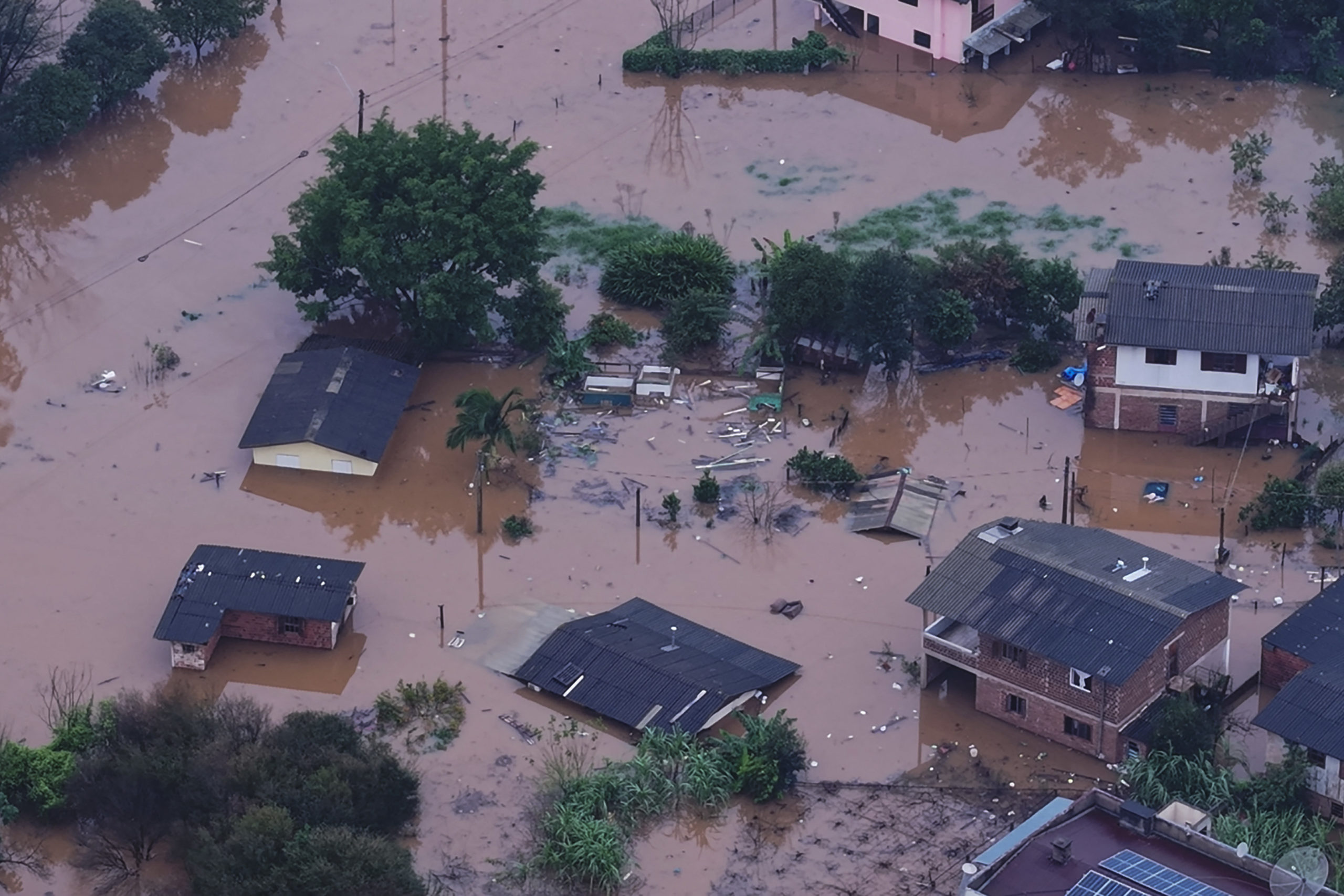 This aerial view shows houses submerged by floodwaters from the overflowing Taquari River near the boundary between the Centro and Planalto neighborhoods in Encantado, Rio Grande do Sul state, Brazil, on July 22, 2026. (Photo by Gustavo Ghisleni / AFP)
The world approaches a climate milestone that seemed far away up until recently: exceeding the 1.5 °C warming limit compared to pre-industrial levels. According to a report entitled Limiting Overshoot: Navigating exceedance of 1.5 °C and pathways towards return, published by the United Nations Environment Program (UNEP), the planet is to exceed this level already during this decade.
This scenario creates a new dimension for the climate discussion. The issue is no longer merely avoiding the overshoot of the 1.5 °C limit established by the Paris Accord, but rather limiting how much and for how long temperatures will remain above this level and reducing the impacts of this trajectory on people, communities, and ecosystems.
The concept of “overshoot” describes a trajectory in which global temperatures exceed 1.5 °C, reach a peak, and then begin to fall. The UNEP report indicates this path as a possibility to reduce risks associated with global warming and, at some point, return to levels below 1.5 °C.
Read more


Global temperatures are already nearly 1.4 °C warmer due to human activity and increase around 0.25 °C every ten years. According to the report there are about 130 billion tons of CO2 left in the carbon budget to keep the chance of limiting global warming to 1.5 °C. Considering current emissions of about 40 billion tons of CO2 per year, this budget could be depleted in approximately three years.
Even at the most optimistic scenario in terms of commitments being observed and climate policies being enforced, analyzed by the UNEP, peak warming might reach about 1.8 °C. With current policies, the median forecast reaches about 2.6 °C by 2100.
The difference between 1.5 °C, 1.8 °C or 2 °C may seem small when expressed in numbers. When it comes to the climate, however, every tenth of a degree represents an increase in the intensity and frequency of risks affecting populations and territories in an unequal manner, in addition to the approaching of points of non-return, such as the transformation of the Amazon into a savannah.
What’s at stake
The 1.5 °C limit was established by science and formalized in the Paris Accord as part of the international effort to keep global warming well below 2 °C and pursue efforts to limit it to 1.5 °C. As such, overshooting this level does not mean that the goal lost its relevance.
It means that the space to achieve it has become narrower and that decisions made right now will determine the intensity and the duration of the warming period exceeding that limit. Each year of high emissions reduces this buffer space. According to the UNEP, for every five years of high emissions, peak warming can increase by about 0.1 °C.
Even a limited overshot will have significant impacts. Higher temperatures intensify extreme events, the loss of biodiversity, food and water insecurity, higher sea levels, and damage to health and ways of living.
It is precisely at this point that the climate crisis becomes no longer just an environmental issue, but also a question of human rights.
When the climate jeopardizes rights
Climate change directly affects fundamental rights. Higher temperatures and more intense extreme events can pressure health systems and expand risks related to heat, illness, malnutrition, and respiratory problems. A lower availability of water compromises the food supply as well as farming and economic activities. Droughts and changes to rainfall patterns can affect food production and, consequently, the right to food.
Extreme events can also destroy houses, infrastructure, and public facilities. Floods, erosion, prolonged drought and higher sea levels can make specific territories harder or impossible to inhabit, causing forced displacements and affecting rights such as housing, health, food, water, and permanence in territories.
These impacts are not evenly spread. Populations that historically contributed less to global warming are among those most exposed to the effects of the climate crisis. Indigenous peoples, quilombola and traditional communities, people of African descent, children and adolescents, the elderly, people with disabilities, lower-income populations, and people living in vulnerable territories may face higher risks in the face of droughts, floods, heatwaves, fires, food insecurity, and forced displacements.
When a community is removed from its territory, for instance, this situation involves more than just housing and income. Community ties, cultural practices, ways of working, and historically-built relations with the land may also be affected.
Hence why the climate emergency also involves rights to participation, information, and access to justice. A human rights-based climate policy must ensure that those affected may participate in decisions that determine the future of their territories and have mechanisms to claim protection, accountability, and reparations.
There is no return without costs
The UNEP report is notable for another important aspect: going back under 1.5 °C is theoretically possible, but doesn’t mean that the damage caused by global warming can be simply undone.
That scenario would take quick and deep reductions of greenhouse gas emissions, the progressive phasing out of fossil fuels towards a fair transition, and prolonged periods of net negative carbon dioxide emissions.
Furthermore, some aspects may persist even after a temperature drop. The higher the maximum temperature reached and the longer the permanence above 1.5 °C, the higher the risks of irreversible or difficult-to-reverse losses in specific ecosystems.
The signs can already be witnessed. Between 2023 and 2025, over 80% of tropical coral reefs went through bleaching events. Over 1.5 °C, there are also higher risks of ecosystem losses and points of no return in important natural systems, such as the Amazon.
Mitigate, adapt, and repair
The scenario described by the UNEP does not mean that climate action became meaningless. The opposite is true: each fraction of a degree avoided reduces risks, and limiting the duration of the period above 1.5 °C may reduce the possibility of irreversible damage.
This requires a combination of two fronts that are often handled separately: mitigation and adaptation.
Mitigating means swiftly reducing the emissions that cause global warming. Adapting means preparing cities, health systems, infrastructure, agriculture, and communities for impacts that are already occurring or can no longer be avoided.
However, from the perspective of human rights, there is yet a third dimension: repairing and fairly distributing the costs of the crisis.
Climate transition does not take place in a neutral field. Countries, businesses, communities, and individuals have different responsibilities and capacities. The consequences are not distributed equally either.
This is why facing the overshoot requires more than technological innovation. It demands quality climate funding spearheaded by developed countries, international cooperation, resource and technology transfers, social protection, the participation of affected communities, and accountability and reparation mechanisms.
A transition to a low carbon economy must also be fair. This requires a consideration of the effects of changes on workers, communities, and populations that depend on carbon-intensive activities, in addition to ensuring that the transition benefits are not concentrated and that their costs are not transferred to those who already experience vulnerable conditions.
The climate crisis puts fundamental rights into question and sheds light on already existing inequalities. Those with fewer resources tend to be less proficient at protecting from impacts, rebuilding their own lives after a disaster, or adapting their territory to new climate conditions.
In this sense, the overshoot is not just a matter of the average temperature of the planet. It is also an issue on who will be able to protect themselves, who will be able to remain in their territory, who will be forced to be displaced, who will lose their means of sustenance, and who will have the resources to rebuild after a disaster.
The UNEP report does not state that all is lost. But the trajectory it offers is not comfortable. The higher the peak warming level and the longer the planet remains above 1.5 °C, the higher the risks and the harder the adaptation.
Ultimately, scientists are posing a question that is also political and related to human rights: it’s not a matter of whether the world will surpass 1.5 °C, but when, for how long, and how the costs of this trajectory will be distributed.
Keeping the possibility of returning to a safer climate open depends on structural choices and changes made in the present. And, in the face of a crisis with unequal impacts, limiting warming means also protecting rights, reducing inequalities, and ensuring that those who contributed the least to the crisis are not those who pay the most for it.