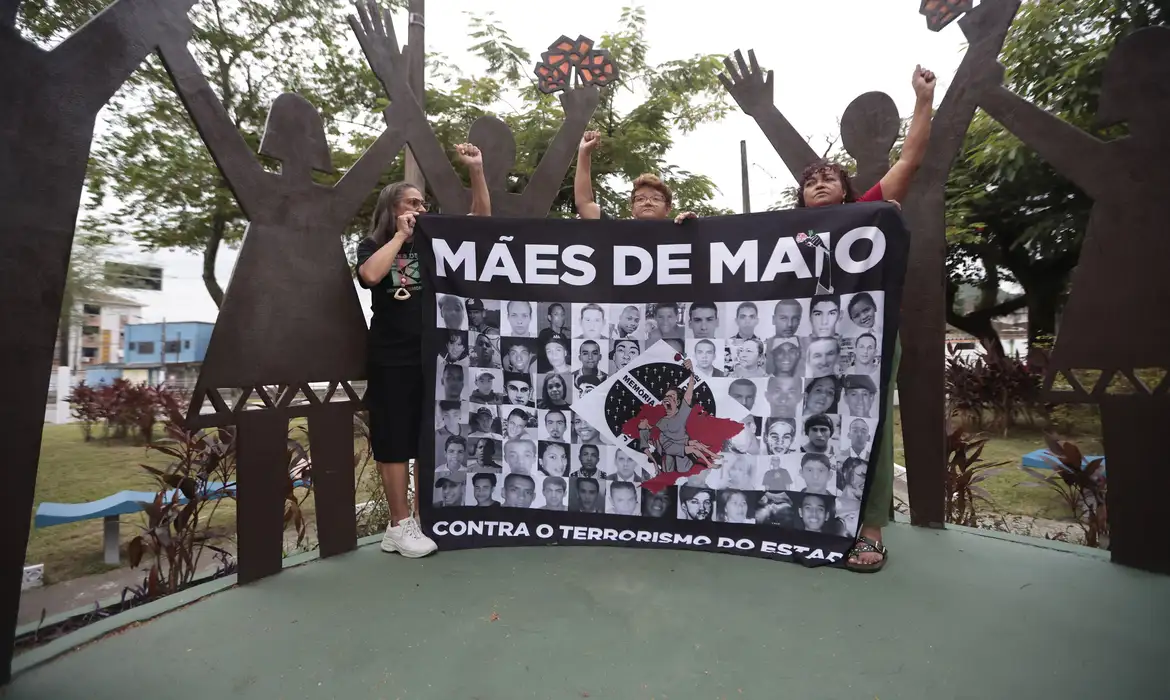
The IACHR issues its observations on the police operations that took place in the Penha and Alemão complexes
The observations highlight the gravity of the facts and the urgent need for effective measures to ensure truth, justice, and reparation for the victims and their families
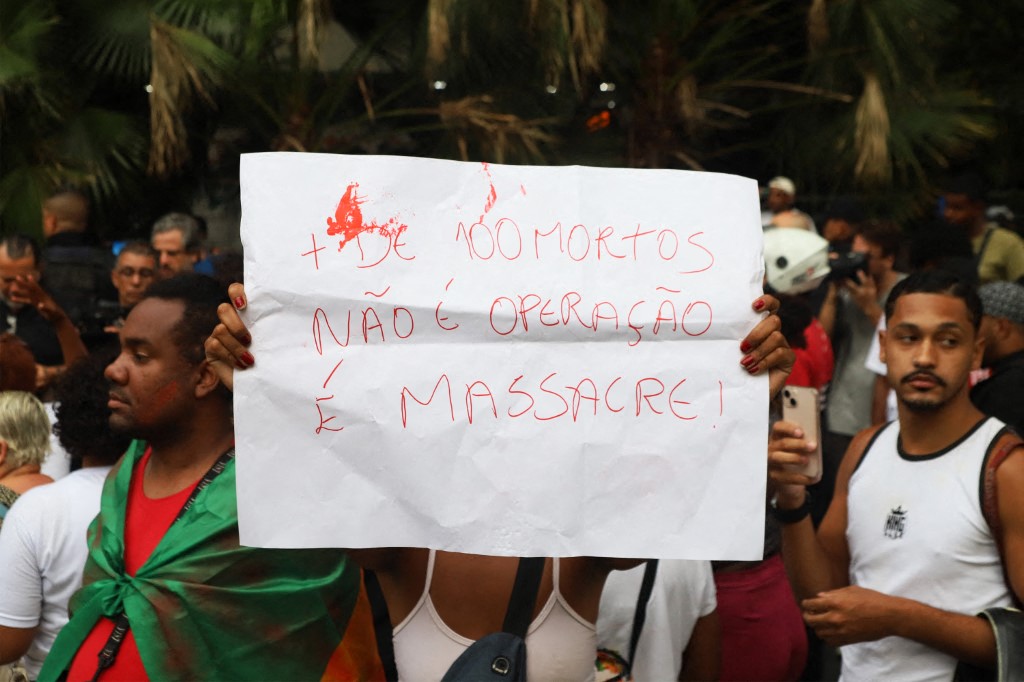 Relatives of those killed during Operation Containment, which arrested 113 criminals and seized 118 weapons in the Alemão and Penha complexes, protest in front of Guanabara Palace in Rio de Janeiro, this Wednesday, October 29, 2025. (Photo by CHARLES SHOLL / Brazil Photo Press via AFP)
In October 2025, the Penha and Alemão complexes experienced scenes of terror, considered the deadliest in Brazil’s recent history. The Inter-American Commission on Human Rights (IACHR) observations regarding human rights and public security in the context of “Operação Contenção” highlight the gravity of the incidents and the urgent need for effective measures to ensure truth, justice, and reparation for the victims and their families. According to the statement, the operation—which mobilized around 2,500 police officers and was justified as a response to the advance of organized crime—resulted in at least 122 deaths, including 117 civilians and 5 police officers, as well as more than 100 arrests.
During its working visit to Brazil, from 1 to 5 December 2025, the IACHR met with several different authorities from various branches and levels of government, as well as representatives from the justice system, international organizations, civil society, experts, and human rights defenders. The delegation also heard from relatives of victims of various police operations and conducted a visit to the Penha complex, where they met with community leaders and relatives of victims of Operação Contenção. Over the course of three days, the Commission gathered 18 direct statements, which formed the basis of their assessment.
The statement makes it clear that Operação Contençao cannot be seen as an isolated incident but rather as indicative of a public security model characterized by institutional violence, structural racism, the stigmatization of low-income communities, and the erosion of access to justice. The IACHR highlights concerns regarding the compatibility of state actions with the principles of legality, absolute necessity, and proportionality in the use of force, as well as ongoing practices that foster impunity and compromise the development of a rights-based citizen security policy.
Read more

The Commission also draws attention to delays, omissions, and concerns regarding the independence of investigations, as well as the absence of a systematic data transparency policy that would allow for disaggregated and accessible monitoring of cases that are under investigation or have been closed, charged, or adjudicated. In the specific case of Operação Contenção, the statement also points to the lack of proactive efforts to establish accessible, reliable channels of communication with relatives and affected communities, which deepens institutional distrust and hinders the pursuit of accountability.
Another central feature of the statement is the documentation of allegations of threats, harassment, intimidation, and delegitimization aimed at community leaders, local journalists, and human rights defenders. According to the IACHR, the shrinking of civic space undermines the ability of the communities to organize, discourages the reporting of abuses, and compromises social participation in the formulation of public policies.
Progress in investigations and filing complaints
Following the IACHR visit to Brazil, 26 civil society organizations came together to call on the Commission to convene a thematic hearing on police operations in Rio de Janeiro. The request for a hearing was submitted to ensure direct monitoring by the Commission of the violations identified. The organizations denounced the absence of independent forensic examinations, the lack of autonomous investigations, and attempts to criminalize victims’ relatives, residents, human rights defenders, and the community communicators who were involved in reporting the incidents. They also pointed to the Brazilian State’s failure to comply with rulings previously issued by the Federal Supreme Court in ADPF 635 and with decisions reached by the Inter-American Court of Human Rights in the Acari and Nova Brasília cases, which require concrete measures to reduce police lethality and align investigation protocols with an intersectional approach.
The hearing took place on 11 March in Guatemala City, during the 195th Ordinary Period of Sessions.
On the same day, the Rio de Janeiro State Public Prosecutor’s office (MPRJ) filed charges against ten military police officers from the Battalion of Canine Operations (BAC) for obstructing the functioning of body cameras and for unlawful home entries during Operação Contenção. According to the Office, one of the charges alleges that five of the military police officers disobeyed a superior order by interfering with the cameras with the aim of preventing or hindering images taken during the operation. Analysis of recordings showed that, on several occasions, equipment had been positioned improperly and directed at points that blocked visibility.
According to the IACHR report published on 6 March, only 183 of the 2,500 police officers mobilized for the operation wore body cameras, reinforcing concerns about external oversight of police activity, transparency, and the production of evidence. A further five officers were charged with unlawful entry into homes and commercial establishments without a warrant or residents’ consent. With these latest cases, the Public Prosecutor’s Office has now filed eight charges against 19 police officers for misconduct related to the operation.
The need for an effective state response
The observations of the IACHR reiterate that addressing armed violence and crime cannot be employed as justification for practices that are incompatible with the international obligations that Brazil has undertaken. It is essential that the State ensure prompt, independent, and impartial investigations, with the effective participation of families; adopt protective measures for communities and human rights defenders; and undertake a structural review of the public security policy implemented in favelas and peripheral regions of Rio de Janeiro.
The State’s response to Operação Contenção will be a decisive test of Brazil’s commitment to human rights, the oversight of institutional violence, and overcoming entrenched patterns of police lethality and impunity.