“Half of the Brazilian population is under surveillance”
Event with UN Rapporteur sheds light on uncontrolled expansion of facial recognition and its impacts
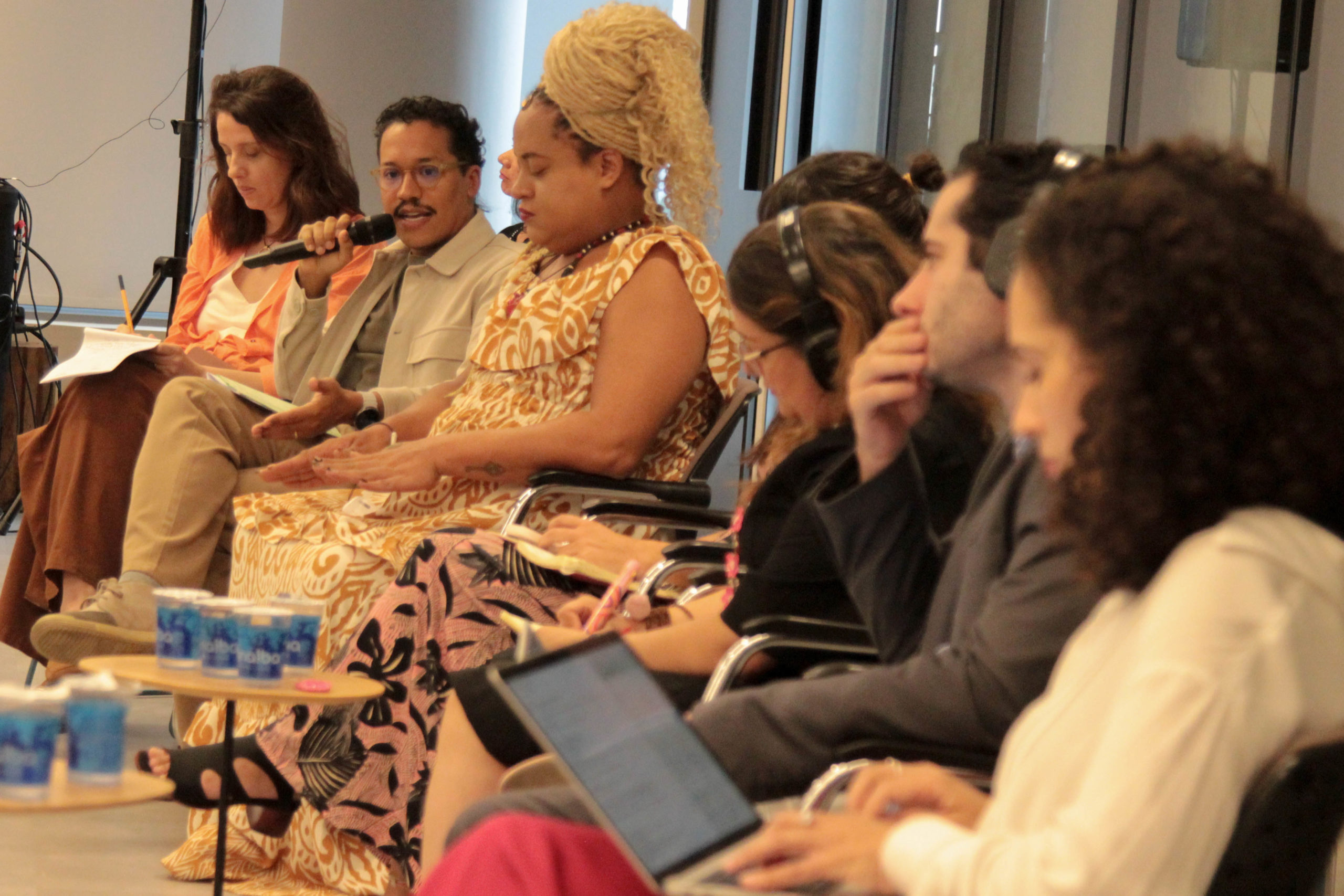 Pablo Nunes em evento com Relatora da ONU
In Brazil, where surveillance technologies are multiplying without transparency or regulation, experts and activists have gathered this Wednesday (12/03) in São Paulo, at the event entitled Reconhecimento Facial e Impacto nos Territórios (Facial Recognition and Impact on Territories, in a free translation). The event was part of the agenda of Gina Romero, United Nations Special Rapporteur on the Rights to Freedom of Peaceful Assembly and of Association, in her official visit to the country.
Romero warned of a “context of democratic setbacks”, in which surveillance technologies have been used to monitor political opponents, to crackdown on protests and persecute civil society. The rapporteur highlighted that vulnerable groups such as Black people, poor people, indigenous peoples and immigrants are the most affected and highlighted an aspect she noticed in São Paulo: the proliferation of totems and surveillance spots spread throughout the city, collecting information without transparency.
The rapporteur also noted that the growing surveillance environment affects the assurance of rights and access to public services, including health. According to her, the accelerated expansion of surveillance occurs without minimum answers on the use and future of this data. “Which information are they harvesting? What will they use it for?”, she questioned. She further pointed out that the population’s fears involving public safety have been used as a strategy to legitimize the sale of these technologies.
Read more

Researcher Pablo Nunes (CESeC) reinforced the dimension of this scenario. Half of the Brazilian population is under surveillance. He presented data from Panóptico, the monitor of new public safety technologies created by civil society, given the lack of transparency of official data: 485 projects in the country use facial recognition techniques, potentially affecting 87,152,540 surveilled persons.
Nunes warned of distortions in investments. Cities without relevant criminality rates, many of them without violent crimes reported for over five years, receive expensive facial recognition technologies without having, for instance, a reference hospital.
From Argentina, Tomás Griffa (CELS) reported the experience of legal action in Buenos Aires, where the implementing of facial recognition disregarded basic legal requirements. According to Tomás, there are multiple levels of problems in the system: this includes legitimate restrictions to people’s privacy and their constitutional rights, which leads to arbitrary arrests.
The legal dispute in the neighboring country echoes the battle fought in Brazil, where civil society organizations face similar violations.
This connection became clear when Raquel da Cruz Lima (ARTIGO 19) spoke presenting the Public Civil Lawsuit against the São Paulo Subway. The lawsuit seeks to prevent 4 million daily passengers from having their faces collected and monitored without proper information, a situation that repeats, in another context, the same patterns of abuse seen in Argentina. Both experiences show that the absence of legal safeguards creates space for violations, political surveillance, and the risk of wrongful arrests.
Directly from the portion of the Amazon in the state of Pará, Dandara Rudsan (foclimax) described how facial recognition adds a layer of the policy of fear in traditional communities, preventing the exercise of the right of assembly. “We have become demobilized or have difficulty protesting.”
The event was organized by ARTIGO 19 Brazil and South America, Conectas Direitos Humanos and by the Specialized Center for Citizenship and Human Rights of the São Paulo Public Defender’s Office.